Luxury Honeymoon Villas USA: The Definitive Editorial Guide
The landscape of high-tier romantic travel within the United States has undergone a quiet but profound institutional shift. While the traditional European grand tour or the secluded South Pacific overwater bungalow once represented the peak of post-marital luxury, a new paradigm has emerged that prioritizes spatial autonomy, architectural distinction, and geographic diversity within the domestic sphere. This evolution is driven by a sophisticated cohort of travelers who view the “villa” not merely as a high-end accommodation, but as a sovereign environment where the service layer is subservient to the privacy of the couple.
In this context, the domestic villa market serves as a complex intersection of real estate investment and high hospitality. The United States offers a topographical range that is virtually unmatched, from the arid desert-modernist structures of the Southwest to the neoclassical estates of the Atlantic coast. However, the true complexity of navigating this market lies in the “Service-Privacy Paradox.” As properties become more isolated and expensive, the logistical challenge of maintaining a five-star service standard without intruding upon the couple’s seclusion becomes an exercise in high-level operational management.
Furthermore, the choice of a domestic destination is increasingly seen through the lens of “Time-Optimization.” For the professional couple, the elimination of long-haul transoceanic flight fatigue and the complexities of international customs allows for a higher “purity of experience.” This shift does not represent a compromise in luxury; rather, it reflects a move toward “Invisible Service”—a system where every need is anticipated and met through technological integration or discreet staff movement, allowing the architectural environment to remain the focal point of the honeymoon.
Understanding “luxury honeymoon villas usa”
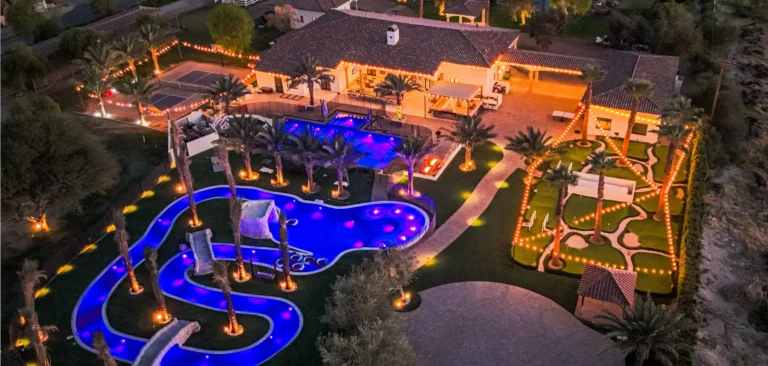
To analyze luxury honeymoon villas usa as a distinct asset class, one must move beyond the marketing imagery of infinity pools and floor-to-ceiling glass. The sector is defined by its ability to provide “Compounded Seclusion”—the feeling of being entirely removed from the public eye while remaining within a robust logistical network. A common misunderstanding among planners is that a high price point in a popular destination, such as Malibu or Aspen, automatically guarantees this seclusion. In reality, density in these high-value markets often leads to “Visual Friction,” where the luxury of the villa is compromised by the proximity of neighboring properties.
The risk of oversimplification is particularly high when evaluating “Villas vs. Suites.” While many five-star resorts offer “villas,” these are often just larger rooms within a communal infrastructure. A true luxury honeymoon villa in the domestic market should be evaluated on its “Operational Autonomy”—does it have its own kitchen, staff entrance, and private recreational facilities that do not require interaction with the main resort? For the honeymooner, the villa is a psychological buffer. It must function as a complete ecosystem, providing the “Sanitized Wilderness” that modern luxury demands: total immersion in nature without the associated discomforts or logistical failures.
Furthermore, the geographic diversity of the U.S. creates varied “Performance Demands” for these villas. A villa in the humid climate of the Florida Keys requires a different architectural and maintenance philosophy than a mountain estate in Montana. Understanding these examples requires a multi-perspective explanation that weighs “Architectural Merit” against “Service Reliability.” A successful villa is one where the design honors the local landscape, but the technology and hospitality layer are global in standard.
Contextual Background: The Evolution of American Estate Hospitality
Historically, the American concept of the “honeymoon retreat” was centered on the grand hotel—monolithic structures like those found in Newport or the Catskills. These were social environments where “luxury” was defined by visibility. However, the late 20th century saw the rise of the “Private Estate” model, influenced by the burgeoning vacation rental market and the professionalization of property management.

The 2020s have accelerated this trend toward “Isolationist Luxury.” The expansion of private aviation and the rise of the “Work-from-Anywhere” executive class have turned the domestic villa into a high-utility asset. It is no longer just a place to sleep; it is a fortress of wellness and productivity. The modern American villa now integrates medical-grade air filtration, professional-grade wellness centers, and highly secure digital infrastructures, reflecting a broader cultural shift where the home—even a temporary one—is the center of the individual’s universe.
Conceptual Frameworks for Evaluative Planning
To evaluate a potential villa, three mental models are particularly effective:
-
The “Staff-to-Space” Ratio: This measures the efficiency of invisible service. A high-tier villa should have enough staff to maintain the estate without the couple ever seeing a vacuum cleaner or a maintenance cart. It is the “Ghost in the Machine” framework of hospitality.
-
The “Boutique-to-Institutional” Spectrum: This evaluates whether a property is managed by an individual owner (high personality, variable reliability) or a hospitality brand (standardized luxury, lower personality). Knowing where a property sits on this spectrum is critical for managing expectations regarding “Service Recovery.”
-
The “Micro-Climate Integrity” Model: This assesses how well the villa’s design handles local environmental stressors. A desert villa that relies solely on high-energy AC without a passive cooling design is a failure of “Architectural Logic” and may lead to a brittle, uncomfortable experience during heatwaves.
Key Categories of Domestic Villa Environments
The U.S. market can be categorized by “Environmental Archetypes,” each offering distinct trade-offs.
| Category | Primary Geography | Strategic Trade-off | Service Hallmark |
| High-Arid Modernist | Arizona, Utah, Palm Springs | Stark beauty vs. extreme heat. | High-tech climate control; star-gazing decks. |
| Pacific Coastal Estate | Big Sur, Malibu, Oregon Coast | Dramatic views vs. fog/moisture. | Indoor-outdoor flow; private chef focus. |
| Alpine/Mountain Lodge | Aspen, Jackson Hole, Montana | Privacy vs. seasonal accessibility. | Ski-in/out; 24-hour fireplace concierge. |
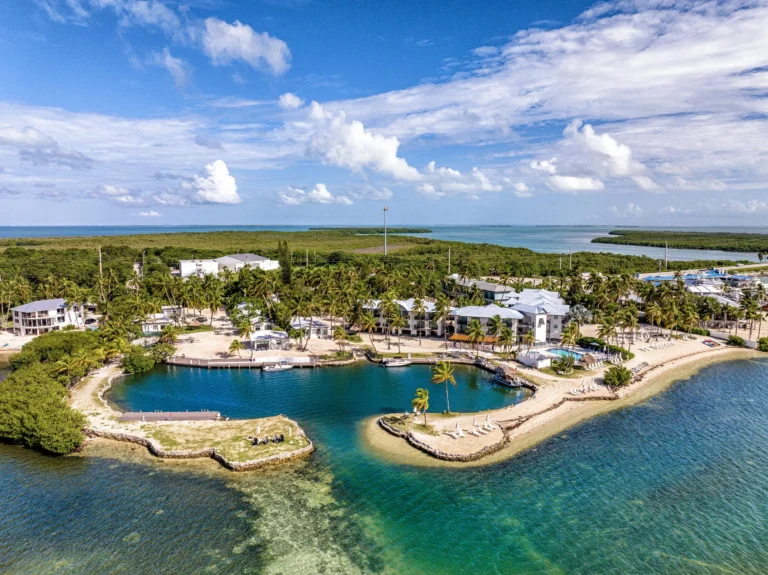
| Tropical Archipelago | Hawaii, Florida Keys | Immersion vs. humidity/insects. | Saltwater pools; boat-access only. |
| Low-Country Pastoral | South Carolina, Georgia | Historic charm vs. slower service pace. | Screened-in verandas; equestrian access. |
| Napa/Sonoma Viticulture | Northern California | Culinary access vs. tourist density. | In-villa wine cellars; farm-to-table service. |
Realistic Decision Logic
Couples should prioritize the “Psychological Climate” of the destination over the visual aesthetic. A couple seeking “Neural Decompression” should opt for the High-Arid Modernist or Alpine Lodge models, where the silence is a functional part of the luxury. Conversely, those seeking “Sensory Engagement” will find the Viticulture or Pacific Coastal models more rewarding due to the proximity of high-end culinary and social hubs.
Detailed Real-World Scenarios and Operational Stressors
Scenario 1: The “Malibu Density” Conflict
A couple books a $5,000-per-night villa in Malibu, expecting total seclusion.
-
Constraint: The property is on a hillside where sound carries from the Pacific Coast Highway and neighboring construction.
-
Failure Mode: The “Acoustic Privacy” is compromised.
-
Lesson: In high-value domestic markets, “Visual Privacy” does not equate to “Auditory Privacy.” A checklist must include an audit of the surrounding “Soundscape.”
Scenario 2: The “Remote Montana” Logistical Failure
A couple chooses a remote ranch villa for their honeymoon to “get away from it all.”
-
Decision Point: They arrive during a late-spring blizzard.
-
Constraint: The private chef cannot reach the property due to unplowed roads.
-
Outcome: The couple, expecting a 5-star meal, is left with pantry staples.
-
Correction: High-tier villas in remote areas must have “On-Site Redundancy,” including live-in staff quarters or a 72-hour luxury food supply.
Scenario 3: The “Desert Modern” Glass Trap
Choosing a glass-walled villa in Scottsdale for the “Aman-style” aesthetic.
-
Context: The honeymoon is in July.
-
Failure Mode: Despite the AC, the “Radiant Heat” from the glass makes the living area unusable between 2:00 PM and 5:00 PM.
-
Outcome: The couple spends their afternoons in the darkened bedroom.
-
Lesson: Design must follow the climate. In the desert, “Thermal Comfort” is the true luxury, not just the view.
Economic Dynamics: Valuation, Costs, and Resource Allocation
The economics of luxury honeymoon villas usa are driven by the “Exclusivity Premium.” Prices are not merely a reflection of the room, but of the “Buffer Zone” around the property.
| Expense Category | Premium Range (Daily) | Variability Factors |
| Villa Rental | $2,500 – $15,000 | Location, architectural pedigree, square footage. |
| Private Staffing | $1,000 – $3,500 | Chef, butler, and housekeeping intensity. |
| Logistics & Transit | $500 – $5,000 | Private SUVs; helicopter transfers; regional flights. |
| Bespoke Programming | $800 – $4,000 | In-villa spa, private vineyard tours, guided treks. |
Opportunity Cost: Spending $10k on a villa in a congested area (like Miami) vs. spending $8k on a remote estate with a private jet charter. Often, the “Transit Luxury” provides more emotional value than the “Bed Luxury.”
Strategic Support Systems and Navigation Tools
-
Digital “Site-Visit” Protocols: Using high-resolution drone footage and 3D walkthroughs to verify “Sight-Lines” from neighboring properties before booking.
-
Private Chef Vetting: Not just a menu, but a “Culinary Interview” to ensure the chef can manage specific dietary needs and the “Metabolic Rhythm” of the honeymoon.
-
Advanced Security Integration: For high-profile couples, ensuring the villa has “Physical Security” (gates, sensors) and “Digital Security” (secure Wi-Fi, no smart-speakers).
-
Humidity and Air Quality Sensors: Essential for coastal and tropical villas to ensure the “Sleep Environment” is optimized.
-
Pre-Arrival “Pantry Mapping”: A detailed inventory of preferred brands and specific vintages to ensure the kitchen is a “Mirror of Home.”
-
Local “Fixer” Access: A dedicated concierge who has the social capital to secure last-minute tables at “un-bookable” domestic restaurants.
Risk Landscape: Taxonomy of Failure in Private Estates
The “Villa Model” of travel is more fragile than the “Hotel Model” because it lacks the institutional safety net of a large staff.
-
Systemic Failure: A broken HVAC system in a single villa is a catastrophe; in a hotel, they just move you to another room.
-
Service Inconsistency: The quality of the experience is 100% dependent on 2-3 people (the chef and butler). If one is ill, the service level drops by 50%.
-
Environmental Volatility: Domestic wildfires (West Coast), hurricanes (East/Gulf Coast), and sudden snow (Rockies) can trigger mandatory evacuations, ending the honeymoon instantly.
-
Privacy Breaches: The rise of “Drone Tourism” means even fenced estates are vulnerable to visual intrusion.
Governance and Maintenance: Managing the High-Stakes Itinerary
A villa-based honeymoon requires “Operational Governance”—the couple must manage the staff and the schedule, or delegate this to a “Lead Butler.”
-
The “Invisible Hours” Schedule: Agreeing on when housekeeping and maintenance occur (e.g., 9:00 AM – 11:00 AM while the couple is at breakfast/pool) to ensure they never see the labor.
-
Review Cycles: A 5-minute “Sync” with the lead staff every morning to adjust the menu or the day’s activities based on the couple’s energy levels.
-
Layered Checklist:
-
Exterior: Pool temperature, deck cleanliness, bug mitigation.
-
Interior: Air quality, linen freshness, tech functionality (Wi-Fi/Sound).
-
Service: Meal timing, beverage stocking, local logistics.
-
Measurement and Evaluation: Quality and Satisfaction Signals
Success in the luxury villa sector is measured by “Absence”—the absence of stress, the absence of noise, and the absence of logistical friction.
-
The “Silent Arrival”: Was the entry to the villa seamless, or were there 20 minutes of “tours” and “explanations”? True luxury is intuitive.
-
“Recovery Velocity”: How many days did it take for the couple to stop checking their phones? A high-quality villa accelerates the “De-stressing” process.
-
Leading Indicator: The depth of the “Pre-Arrival Questionnaire.” If the management isn’t asking about pillow firmness and preferred water temperature before you arrive, they aren’t practicing high-tier hospitality.
-
Lagging Indicator: The “Homecoming Blues”—the desire to replicate the villa’s environment at home.
Common Misconceptions and Industry Oversimplifications
-
Myth: “Domestic” means “Easier.” Correction: Managing a private estate in Montana can be more complex than a resort in the Maldives due to weather and staffing shortages.
-
Myth: Villas are only for groups. Correction: Many of the best luxury honeymoon villas usa are specifically designed as “One-Bedroom Estates” for maximum intimacy.
-
Myth: High price equals high tech. Correction: Some of the most expensive villas are “Analog by Design,” prioritizing wood fires and silence over smart homes.
-
Myth: Airbnb Luxe is the same as a Managed Villa. Correction: A managed villa includes a professional hospitality layer; an Airbnb is often just a nice house with a remote owner.
Ethical and Sustainability Considerations
The footprint of a 5,000-square-foot villa for two people is significant. Couples are increasingly looking for “Passive Luxury”:
-
Solar-Integrated Micro-Grids: Ensuring the villa’s high energy demand (heated pools, AC) is offset by on-site renewables.
-
Water Autonomy: Desalination or advanced gray-water recycling, especially in California and the Southwest.
-
Hyper-Local Sourcing: Reducing the “Carbon Cost” of food by using only what is grown within a 50-mile radius.
Conclusion: The Synthesis of Privacy and Sophistication
The American luxury villa has matured into a world-class offering that rivals any international destination. Its strength lies in its ability to provide “Architectural Sovereignty”—a space that is entirely the couple’s own, supported by a uniquely American approach to service that is efficient, tech-forward, and increasingly discreet. While the logistical risks of the “Private Estate” model are higher than those of a traditional resort, the rewards—total autonomy, deep environmental immersion, and a personalized hospitality ecosystem—make it the definitive choice for the modern honeymoon. Success in this market requires a move away from the “Search and Click” mentality and toward a disciplined, analytical approach to planning that treats the villa as a living, breathing environment rather than just a backdrop for photography.