Adventure Honeymoon Ideas: The Definitive Guide to Active Luxury Travel
The traditional honeymoon, long defined by a singular focus on physical stasis and luxury insulation, is undergoing a fundamental structural transformation. As the demographic profile of high-intent travelers shifts toward those who value “accumulated experience” over “conspicuous consumption,” the market has seen a surge in demand for journeys that prioritize physiological engagement and environmental immersion. This is not merely a trend toward “outdoor activities”; it is a systemic move toward travel that functions as a shared psychological crucible. For many, the objective is to begin a partnership with a narrative of shared resilience, navigating landscapes that demand more than just passive observation.
Designing such an experience requires a departure from the “resort-centric” model of planning. It necessitates an analytical approach to geography, logistics, and human performance. An adventure-focused journey involves a higher “risk-to-reward” ratio, where the reward is not found in the absence of effort, but in the successful navigation of it. The complexity of orchestrating a high-altitude trek in the Andes or a marine expedition in the Coral Triangle involves layers of variable management—from climatological volatility to the metabolic demands of the participants—that a standard beach retreat simply does not encounter.
This article serves as an authoritative pillar for those analyzing the landscape of active romantic travel. By deconstructing the systemic requirements of these journeys, we move beyond surface-level suggestions to explore the underlying frameworks that allow a high-stakes trip to function as a restorative asset. We will examine the economic underpinnings, the risk taxonomies, and the logistical support systems necessary to transform a series of adventure honeymoon ideas into a resilient, authoritative travel strategy. The goal is to provide a definitive reference that stands up to the scrutiny of experienced travelers and industry professionals alike.
Understanding “adventure honeymoon ideas.”
To analyze adventure honeymoon ideas through a professional editorial lens, one must first dismantle the oversimplification that adventure is synonymous with “discomfort.” In the modern luxury sector, adventure is defined as “curated exposure.” It is the intentional movement into high-intensity environments—rainforests, deserts, or alpine zones—while maintaining a sophisticated service layer that manages the “friction” of the experience. A common misunderstanding is that these ideas are only for the “athletic elite.” This risk of oversimplification ignores the spectrum of accessibility that modern engineering and hospitality now provide.
The primary challenge in this segment is the “Aspiration-Capability Gap.” Travelers often select ideas based on visual salience—a photo of a summit or a remote dive—without calculating the “metabolic cost” required to enjoy that moment. A superior idea is one that aligns the “Environmental Intensity” with the couple’s “Recovery Capacity.” For instance, a journey through the Icelandic highlands in a modified 4×4 provides high-intensity visual and geological exposure with low physical demand, whereas a self-supported cycling tour of the Dolomites has a much higher physical requirement.
Furthermore, adventure ideas must be evaluated for their “Narrative Cohesion.” A series of disconnected activities (zip-lining, then a jeep tour, then a hike) does not constitute an adventure honeymoon; it is merely an activity list. A true adventure-driven itinerary has a “Line of Intent”—a geographic or thematic thread that connects each day, building toward a definitive climax or shared achievement. This requires a multi-perspective explanation that weighs “Physicality,” “Isolation,” and “Novelty” against the couple’s psychological baseline.
Contextual Background: The Evolution of Active Luxury
The lineage of the adventure honeymoon can be traced back to the “Expeditionary Age” of the early 20th century, where scientific discovery and romantic travel often overlapped for the social elite. These were long-duration, high-friction journeys that required significant “boots-on-the-ground” support. Following the mid-century “Resort Era,” which prioritized the elimination of all external variables, the late 1990s saw the emergence of “Soft Adventure.” This was the industry’s first attempt to reintroduce nature into the luxury package, primarily through day-trips from a central hotel base.
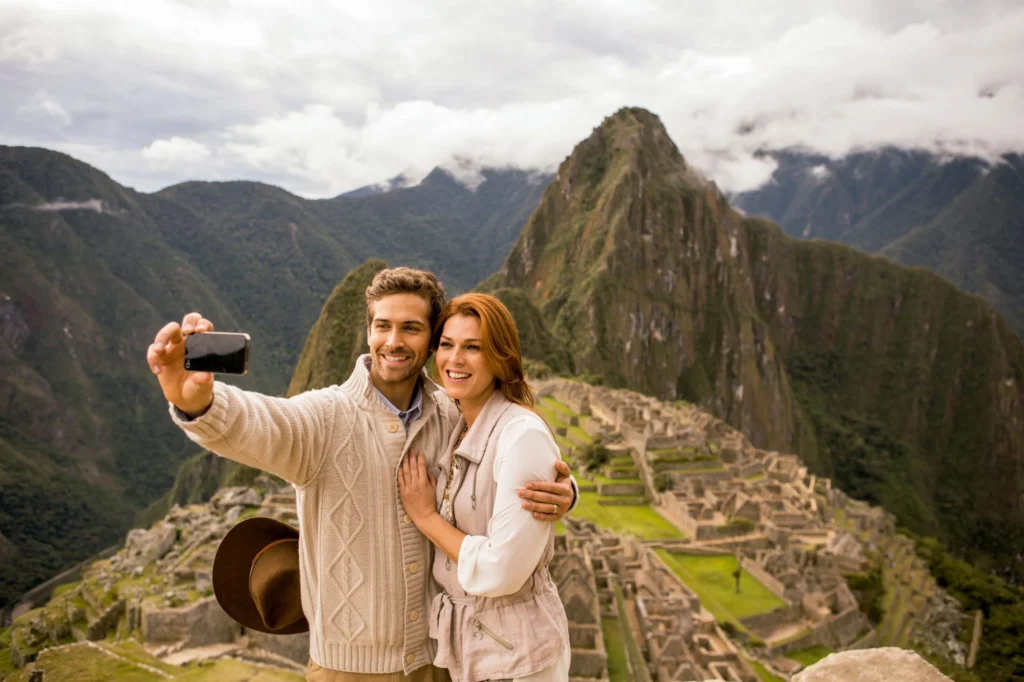
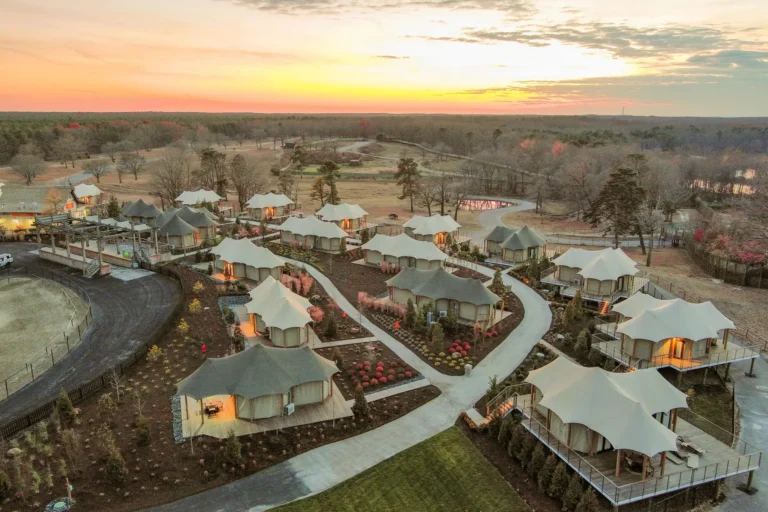
The current systemic evolution is defined by “Deep Integration.” We are now in a period where the “Adventure” and the “Honeymoon” are no longer separate components. The lodging itself—be it a portable luxury camp in the Sahara or a high-tech glass pod in the Peruvian Sacred Valley—is part of the adventure. This shift is supported by massive advancements in satellite communication, lightweight materials, and off-grid energy, allowing for high-intensity luxury in locations that were previously inaccessible.
Conceptual Frameworks for High-Engagement Travel
When evaluating potential itineraries, three mental models are particularly useful for ensuring structural integrity:
-
The “Metabolic Budget” Framework: This treats a couple’s energy as a finite currency. A high-engagement journey must have “Deposit Days” (rest, hydration, low sensory input) to fund the “Withdrawal Days” (summits, long transits, cultural immersion). Failure to manage this budget leads to “Traveler Burnout” by day seven.
-
The “Friction-to-Flow” Ratio: In adventure travel, “friction” (unpaved roads, gear checks, weather delays) is inevitable. A superior itinerary uses “support systems” (private guides, pre-staged luggage) to ensure that the friction never exceeds the “flow”—the moments of awe and connection.
-
The “Threshold of Novelty”: Psychological research suggests that the human brain can only process a certain amount of new stimuli before it begins to filter out detail. Adventure itineraries must be sequenced to avoid “sensory saturation,” where even a stunning glacier becomes “just another ice field” because the pace of exposure was too rapid.
Typologies of Modern Adventure Honeymoons
The marketplace has fractured into several distinct archetypes, each with specific trade-offs regarding cost, intensity, and environmental impact.
| Archetype | Core Environment | Primary Trade-off | Service Hallmark |
| The Alpine Expedition | High Mountains | Altitude sickness risk;gear-intensivee. | Professional mountain guides; heli-transfers. |
| The Marine Safari | Remote Archipelagos | Weather dependency; limited land access. | Private yachts; onboard marine biologists. |
| The Desert Traverse | Arid/Dune Landscapes | Extreme thermal swings; dehydration risk. | Mobile luxury camps; private astro-photographers. |
| The Jungle Immersion | Tropical Rainforests | High humidity; insect presence. | Biophilic architecture; local indigenous tracking. |
| The Polar Frontier | Arctic/Antarctic | Extreme logistics cost; short seasons. | Ice-class vessels; specialized cold-weather gear. |
| The Overlanding Loop | Cross-Country (e.g., Patagonia) | High “time-in-car” metric. | Custom-built 4x4s; satellite-linked support. |
Decision Logic for Travelers
The choice between these typologies should be driven by the “Recovery Metric.” If a couple finds restoration through physical exertion (the “Runner’s High”), the Alpine Expedition is ideal. If they find it through visual awe with minimal physical strain, the Desert Traverse or Polar Frontier provides a more efficient return on investment.
Real-World Scenarios and Operational Constraints
Scenario 1: The Patagonian “Wind Delay”
A couple plans a 5-day trek in Torres del Paine as the centerpiece of their honeymoon.
-
Constraint: Patagonian wind can exceed 70 mph, closing trails without notice.
-
Decision Point: Do you wait in a tent for the wind to drop, or pivot to a 4×4 tour of the steppe?
-
Outcome: A “resilient” itinerary would have a pre-booked “Low-Wind Alternative” (e.g., a luxury estancia stay) to prevent a total loss of the 5-day window.
Scenario 2: The Serengeti “Wildlife Migration” Mismatch
A couple of books about a mobile camp to see the Great Migration based on “historical data.”
-
Constraint: Wildlife movement is dictated by rain, not calendars.
-
Failure Mode: The rain arrives two weeks late, and the camp is located in an empty savanna.
-
Second-Order Effect: The “Adventure” becomes a logistical frustration rather than an immersion.
-
Correction: Utilizing “Light-Aircraft Pivots” to move the couple to where the herds actually are, rather than where the brochure said they would be.
Economics of Adventure: Cost, Resource, and Opportunity
The cost of adventure travel is governed by the “Scarcity of Access.” Unlike city hotels, where prices are driven by demand, adventure prices are driven by “Supply Logistics.”
| Cost Component | Typical Allocation | Variability Factors |
| Remote Logistics | 30% – 40% | Fuel for bush planes; helicopter flight hours. |
| Specialized Human Capital | 20% – 25% | UIAGM guides; private chefs in off-grid sites. |
| Structural Lodging | 20% – 30% | Seasonal “pop-up” costs; off-grid power maintenance. |
| Permits & Conservation | 5% – 10% | National park entry fees; gorilla trekking permits. |
Opportunity Cost: Choosing a 14-day “budget” adventure often costs more in “Value-per-Hour” than a 7-day “premium” adventure. In the remote sector, paying for “Logistical Silence” (not having to wait for shared transport) is the ultimate luxury.
Strategic Support Systems for Remote Logistics
To maintain the “Luxury” in an adventure honeymoon, several invisible support systems must be active:
-
Satellite-Linked Coordination: Real-time tracking of private vehicles and hiking parties to ensure safety without intrusive check-ins.
-
Luggage Forwarding: Having evening wear and non-essential gear moved between lodges via air or road so the couple treks “light.”
-
Medical Evacuation Integration: A non-negotiable “Tool” that provides 24-hour aero-medical standby.
-
Pre-Staged “Comfort Drops”: On long treks, having a support team set up a “luxury pop-up” (hot tea, chairs, foot massages) at the midpoint.
-
Hyper-Local “Nowcasting”: Using localized weather sensors rather than regional forecasts to make “Go/No-Go” decisions on summits or flights.
-
Customized Nutritional Loading: Working with lodge chefs to ensure caloric intake matches the next day’s physical output.
Risk Landscape and Failure Mode Taxonomy
Adventure travel involves a “Compounding Risk” model where small failures lead to systemic collapse.
-
Environmental Risks: Flash floods, altitude sickness, or unseasonal snow.
-
Logistical Risks: Broken vehicle axles in remote deserts; bush plane groundings due to fog.
-
Physical Risks: Minor injuries (sprained ankles) that, in a remote setting, become major “Trip-Enders.”
-
Psychological Risks: “The Argument at 12,000 Feet”—where physical exhaustion leads to interpersonal friction, undermining the romantic purpose of the trip.
Governance: Adapting the Itinerary in Motion
Operating an adventure honeymoon requires a “Dynamic Governance” mindset. The itinerary is a “Living Document” that must be reviewed every 24 hours.
-
The “Energy Audit”: Every evening, the guide or the couple should assess: Are we at 40% or 80% capacity? If capacity is low, the next day’s “Peak” should be replaced with a “Plateau” (rest).
-
Adjustment Triggers: Define “Hard Stops.” For example: “If the wind exceeds 40 mph, we do not fly the helicopter.” Having these rules pre-agreed prevents “Decision Fatigue” during the trip.
-
Layered Checklist:
-
Daily: Gear integrity (boots/seals), hydration levels, battery levels.
-
Mid-Trip: Health assessment, social battery check, “Novelty” refresh.
-
Measurement and Evaluation of Travel Quality
How do you quantify a “successful” adventure?
-
“Flow Time” vs. “Friction Time”: A high-quality trip should have a 10:1 ratio. For every hour spent solving a problem, there should be ten hours of “Deep Immersion.”
-
Metabolic Recovery Rate: Does the couple feel more rested by day 10 than they did on day 2, despite the activity? This indicates the “Metabolic Budget” was managed correctly.
-
Memory Salience: Can the couple recall “High-Definition” moments from each stage, or is the trip a “Blur of Effort”?
-
Leading Indicator: The responsiveness and “Plan B” depth of the travel advisor during the booking phase.
Common Misconceptions and Industry Myths
-
Myth: Adventure honeymoons are “un-romantic.” Correction: Shared challenge is one of the strongest “bonding agents” known in behavioral psychology.
-
Myth: You need to be an athlete. Correction: Most adventure honeymoons use “assistive logistics” (e-bikes, porters, vehicles) to lower the physical barrier.
-
Myth: “Remote” means “Dangerous.” Correction: Premium adventure providers have higher safety protocols and communication tech than most urban hotels.
-
Myth: More activities equal a better trip. Correction: “Density of Experience” is superior to “Volume of Activities.” One deep 6-hour immersion is better than three 2-hour “tours.”
Ethical and Practical Considerations
Adventure travel often takes place in “Fragile Ecosystems” or among “Vulnerable Communities.” An authoritative itinerary must address:
-
Carbon Offsetting for Remote Logistics: Bush planes have high per-passenger emissions; high-tier providers should include vetted carbon removal projects.
-
Economic Leakage: Ensuring that the “Support Staff” (porters, local guides) are paid a “Thriving Wage,” not just a “Minimum Wage.”
-
The “Observer Effect”: Managing how the couple’s presence affects local wildlife or indigenous cultures through “Low-Impact” protocols.
Conclusion: The Future of Shared Exploration
The move toward adventure-driven travel reflects a broader societal shift toward “Active Participation” in one’s own life narrative. The adventure honeymoon ideas discussed here are not just destinations; they are frameworks for shared growth. As technology continues to “shrink” the world, the true luxury will not be the destination itself, but the “Silence,” the “Effort,” and the “Exclusivity of Experience” that only a well-designed, high-engagement journey can provide. Success in this field requires a rare balance: the courage to embrace the unknown and the discipline to engineer the safety net that makes that embrace possible. In the end, a successful honeymoon of this type is measured by the feeling that, together, the couple has not just “seen” the world, but has successfully navigated a piece of it.