Top Coastal Retreats in America: The Definitive Editorial Guide
The American coastline represents more than a geographic boundary; it is a complex, high-stakes intersection of ecological volatility and cultural aspiration. Spanning over 95,000 miles of shoreline when accounting for islands and inlets, the United States possesses a maritime diversity that ranges from the glaciated fjords of the Pacific Northwest to the subtropical mangroves of the Florida Keys. Within this vast expanse, the concept of a “coastal retreat” has transitioned from a seasonal luxury to a critical infrastructure for psychological restoration. This shift is driven by a societal need to engage with the “blue mind”—the scientifically observed state of cognitive calm induced by proximity to water—while navigating the logistical complexities of an increasingly crowded shoreline.
Establishing a definitive hierarchy of maritime destinations requires a departure from the superficial metrics of beach quality or resort star ratings. To identify the most impactful experiences, one must analyze the systemic relationship between the land and the sea. A true coastal retreat is an exercise in liminality, existing at the edge of two worlds. It demands a sophisticated understanding of marine meteorology, littoral ecology, and the historical layers of the maritime communities that have inhabited these edges for centuries. As sea levels rise and coastal development faces unprecedented scrutiny, the very definition of a “top” destination is being rewritten to prioritize environmental resilience and spatial exclusivity over mere accessibility.
The modern traveler faces a landscape of diminishing returns where many historical coastal hubs have succumbed to “over-tourism,” resulting in a degraded sensory experience. To find genuine sanctuary, an analytical approach is required—one that looks past the marketing gloss to examine the “service-to-silence” ratio of a destination. This editorial exploration provides a rigorous framework for evaluating these spaces, ensuring that the choice of a retreat is a strategic investment in well-being rather than a passive reaction to social media visibility. In an era of constant connectivity, the most valuable coastal assets are those that offer a “buffer” from the mainland, utilizing the ocean as a natural moat for privacy and reflection.
Understanding “top coastal retreats in America.”
To objectively define top coastal retreats in America, one must move beyond the “best beach” trope. A retreat is not merely a location for sunbathing; it is a managed environment that facilitates a specific psychological outcome through maritime immersion. In this context, “top” status is a measure of the retreat’s ability to maintain its environmental integrity and service fidelity against the pressures of seasonal influxes and climatic shifts. A premier coastal retreat provides a high-fidelity experience where the sound of the surf is not drowned out by commercial noise, and the visual horizon remains unobstructed by industrial development.
A multi-perspective view reveals that “coastal” is an umbrella term for radically different environmental realities. The cold-water, high-energy coastlines of Northern California and Maine offer an “introspective” luxury—centered on fireplaces, fog-shrouded vistas, and rugged isolation. Conversely, the warm-water, low-energy coastlines of the Gulf Coast or the Virgin Islands offer an “extrospective” luxury—focused on water-based activities, transparency, and thermal consistency. The failure to distinguish between these leads to a mismatch between traveler expectations and the geographic reality of the site. One does not go to Big Sur for a swim-up bar, nor to South Beach for monastic silence.
There is a significant oversimplification risk in assuming that “luxury” in a coastal setting is purely a function of the physical room. In reality, the luxury of a maritime retreat is found in its “private littoral access.” This is the ability of a property to offer a direct, unobstructed, and private connection to the water’s edge. In a country where much of the shoreline is public or heavily contested, the management of this “edge” is the primary differentiator of elite destinations. True mastery of this subject involves recognizing that the most prestigious retreats often utilize “negative space”—the absence of crowds and the presence of raw, uncurated nature—as their primary amenity.
The Historical and Systemic Evolution of the American Shoreline
The American maritime retreat began as a site of physical necessity. In the 18th and 19th centuries, coastal towns like Newport, Rhode Island, and Cape May, New Jersey, were established as “summering” grounds for the urban elite seeking relief from the heat and cholera outbreaks of cities. These early retreats were built on the “Grand Hotel” model—massive, socially rigid structures that brought the hierarchies of the city to the edge of the ocean. The ocean was viewed as a medicinal backdrop, something to be viewed from a shaded veranda rather than engaged with directly.
The 20th century saw the democratization of the coast through the rise of the “beach bungalow” and the interstate highway system. This era prioritized throughput and the “resort corridor,” leading to the vertical development of Florida’s coastline and the commercialization of the Outer Banks. This systemic shift created a “commoditized coast,” where the individual experience was sacrificed for scale. However, the late 20th century also birthed the “Coastal Conservation” movement, resulting in the protection of National Seashores. This created a new tier of retreats: those situated within or adjacent to protected wilderness, where the luxury is defined by a lack of development.
Today, we are in the era of the “Adaptive Shoreline.” As climate change accelerates littoral erosion and storm intensity, the most sophisticated coastal retreats are transitioning from static, vulnerable structures to “resilient estates.” This evolution involves architectural innovation—homes on pylons, salt-resistant materials, and managed retreat strategies. The modern “top” retreat acknowledges its impermanence and integrates its design into the shifting sands and rising tides, offering an ecologically honest luxury.
Conceptual Frameworks and Mental Models for Maritime Evaluation
To evaluate a coastal destination with clinical precision, the following mental models are essential.
The Thermal Inertia Model
This model assesses a destination’s climate resilience based on the surrounding water mass. Coastal areas with high thermal inertia (like those near the Gulf Stream) maintain stable temperatures, while those near cold currents (like the California Current) experience dramatic “marine layers” or fog. Understanding this determines the “utility window” of a retreat—when the environment is actually conducive to the intended activity.
The “Acoustic Buffer” Framework
In a maritime setting, sound travels differently. This framework evaluates a retreat based on its “acoustic fidelity.” Can you hear the specific frequency of the tide? A premier retreat has been geographically or architecturally insulated from the “low-frequency hum” of nearby roads or ports, which can shatter the psychological benefit of the water.
The Littoral-Density Inverse
This posits that as the density of human infrastructure increases, the ecological “vitality” of the coast decreases. A top-tier retreat seeks to find the “Goldilocks zone”: enough infrastructure to provide comfort, but not so much that it interferes with the natural movement of the dunes, tides, and local marine life.
Key Categories of Coastal Biomes and Trade-offs
The American coastline is segmented into distinct “maritime biomes.” Choosing between them requires an understanding of their inherent trade-offs.
| Biome | Geographic Profile | Primary Trade-off | Ideal For |
| New England Granite | Rocky, cold-water, historical. | Severe winters; limited “swimming” season. | Intellectual retreats; sailing; autumn aesthetics. |
| Mid-Atlantic Barrier | Sandy, high-energy, expansive. | Extreme vulnerability to hurricanes/erosion. | Family retreats; sunrise views; vast horizons. |
| Lowcountry Marsh | Subtropical, tidal, verdant. | High humidity, insect density, and complex navigation. | Eco-immersion; kayaking; culinary focus. |
| Florida Tropical | Warm-water, coral, palm-dense. | Over-development; high humidity; “tourist” noise. | Year-round sun; diving; resort-style luxury. |
| Pacific Northwest Fjord | Glaciated, deep-water, old-growth. | High rainfall, rocky beaches, and dramatic tides. | Deep solitude; hiking; cold-water aesthetics. |
| California Terraced | Cliffs, kelp forests, Mediterranean. | High cost; fire risk; difficult water access. | Surfing, sunset-focus, architectural luxury. |
Detailed Real-World Scenarios and Decision Logic
Scenario A: The High-Stress Professional Couple
A couple works 90-hour weeks in Manhattan and seeks a 4-day “hard reset.”
-
The Constraint: They need minimal travel time but absolute visual seclusion.
-
The Decision: A private estate in the Hamptons or a boutique inn on Rhode Island’s southern coast.
-
Logic: The “Sound” side of these regions offers calmer water and lower acoustic noise than the “Ocean” side, facilitating deeper sleep. The proximity allows them to bypass the “transit tax” of flying, maximizing their time at the “blue edge.”
Scenario B: The Multi-Generational Legacy Gathering
A family spanning three generations needs a summer-long base.
-
The Constraint: Varying mobility levels; need for both “quiet” and “activity” zones.
-
The Decision: A large-scale residence in the Sea Islands of South Carolina.
-
Logic: The flat topography is mobility-friendly, and the tidal marsh system provides a “buffer” between houses, allowing the older generation to be silent while the younger generation has access to high-activity marinas.
Scenario C: The Solo Intellectual Retreat
A writer or researcher seeking “monastic” conditions for deep work.
-
The Constraint: Total lack of social distractions; cool temperatures for focus.
-
The Decision: A cabin on the Olympic Peninsula of Washington state.
-
Logic: The high rainfall and dense forest-to-sea integration act as a natural barrier to tourism. The maritime atmosphere promotes a specific type of cognitive focus that is difficult to find in sunny, “social” coastal hubs.
Planning, Cost, and Resource Dynamics
The economic architecture of a coastal retreat is dictated by “proximity to the mean high-tide line.” In the U.S., every foot closer to the water increases the capital and maintenance costs exponentially.
Estimated Resource Allocation Table
| Tier | Weekly Rate (Base) | Maintenance Overhead | Hidden Costs |
| Boutique Shoreline | $5,000 – $10,000 | Low (Managed by hotel) | Parking/Resort fees |
| Private Coastal Estate | $15,000 – $40,000 | High (Salt-air corrosion) | Private security/Chef |
| Island Hideaway | $50,000 – $150,000+ | Very High (Barge logistics) | Air-charter/Supply chain |
Opportunity Cost: Choosing a remote Maine island over a Nantucket estate involves an opportunity cost of “Social Capital.” In Nantucket, you are paying for access to a social network; in Maine, you are paying for the absence of it. Understanding which resource you are actually purchasing is critical for value realization.
Tools, Strategies, and Strategic Support Systems
-
The “Littoral Access” Audit: Before booking, use satellite imagery (Google Earth) to verify if the “private beach” is actually private or if a public access path runs directly through the property.
-
Marine Weather Integration: Utilize apps like “Windy” or “NOAA Marine Forecast” rather than standard weather apps. Standard apps miss the “onshore flow” and “marine layer” dynamics that can drop temperatures by 20 degrees in minutes.
-
The “Red-Tide” Monitor: For Florida and Gulf retreats, check the local algae bloom reports (Mote Marine Laboratory). A $20,000-a-week retreat is worthless if the air is filled with respiratory irritants from an active bloom.
-
Tidal Precision Tools: Use “Tides Near Me” to plan “beach windows.” On rocky coasts (Oregon/Washington), the difference between a high and low tide determines whether you have a beach at all or just a cliff face.
-
Private Aviation Charters: For island retreats (San Juan Islands, FL Keys), utilizing boutique carriers like “Linear Air” or private seaplanes bypasses the “bottleneck” of ferry queues, which can add 6 hours to a trip.
-
Salt-Air Resilience Gear: Professional travelers pack “Dry Bags” (Yeti/Patagonia) for all electronics. Even inside a luxury room, the ambient salt-humidity can degrade high-end camera gear over a 14-day stay.
The Risk Landscape: Compounding Failures at the Edge
Coastal luxury is inherently fragile. The very elements that provide beauty—the wind, the salt, the water—are the same elements that destroy infrastructure.
-
The “Humidity Cascade”: A failure in the HVAC system of a luxury coastal villa leads to “indoor dew point” issues within 4 hours, causing irreversible damage to fine art or high-end textiles.
-
Geological “Scour”: In barrier island retreats, a single storm can “scour” the beach from beneath a property, leaving it physically safe but visually degraded and inaccessible.
-
Logistical Isolation: On islands, a mechanical failure in the local ferry or a small-craft advisory can turn a “retreat” into an “entrapment,” causing missed international flights or medical emergencies.
-
Ecological “Dead Zones”: Agricultural runoff can lead to localized “hypoxia,” causing fish kills on the very beach you intended to enjoy. This is a systemic risk in “Lowcountry” or Gulf regions.
Governance, Maintenance, and Long-Term Adaptation
For those who own or frequently lease “top” coastal assets, a “Governance” mindset is required to protect the investment.
-
The “Corrosion Audit”: Any coastal asset requires a 6-month review of all external hardware. Salt air penetrates “marine-grade” steel eventually.
-
Managed Retreat Strategy: As sea levels rise, the most valuable coastal properties are those with a plan for “elevation” or “relocation.” A property that cannot adapt is a “sinking asset.”
-
Seasonal “De-commissioning”: In the Northeast, “winterizing” a coastal retreat is a 40-step process. Failure to follow this leads to burst pipes and structural rot that may not be visible until the following July.
-
Layered Safety Checklist:
-
EPIRB (Emergency Position Indicating Radio Beacon) tested? Are storm shutters functional?
-
Flood insurance “gap” coverage confirmed?
-
Backup generator fuel-stabilizer added?
-
Measurement, Tracking, and Evaluation Metrics
-
The “Blue-Mind” Delta: Use a wearable (Apple Watch/Garmin) to track heart-rate variability (HRV) and sleep quality. A successful coastal retreat should show a 15% increase in HRV within 72 hours of arrival.
-
Horizon-Clarity Score: A qualitative measure of how many days during a stay the “infinite horizon” was visible. This tracks the value of the “view” you paid for.
-
Transit-to-Immersion Ratio: The amount of time spent in a car/plane versus the time spent within 50 feet of the water. The target should be >10:1 immersion-to-transit.
-
Documentation Example: Maintaining a “Tidal Journal” that records sightings of marine life (whales, birds, tides) to build a long-term “ecological baseline” of the retreat.
Common Misconceptions and Oversimplifications
-
Myth: “South-facing” is always better. Fact: On the West Coast, north-facing properties often get better “indirect light” and are protected from the harshest afternoon heat.
-
Myth: Private islands are more “private.” Fact: Many private islands are surrounded by public waterways. Boat noise can be significantly more intrusive than road noise.
-
Myth: Summer is the only time for the coast. Fact: “Storm watching” in the winter on the Pacific coast is a high-fidelity luxury experience that offers 100% privacy and dramatic visual energy.
-
Myth: Barrier islands are permanent. Fact: They are “moving” landmasses. Buying a “top” retreat on a barrier island is a lease from nature, not permanent ownership.
-
Myth: “Oceanfront” means “Beach access.” Fact: Many oceanfront properties are atop “unclimbable” cliffs. Always verify the physical path to the sand.
Ethical, Ecological, and Contextual Considerations
The selection of a coastal retreat carries an ethical weight. As coastal squeeze intensifies, the presence of high-end retreats often displaces local fishing communities and erodes public land rights.
-
Environmental Stewardship: Support retreats that utilize “Living Shorelines” (oyster reefs, mangroves) instead of “Hard Seawalls,” which destroy the beach for everyone else.
-
Light Pollution: Coastal retreats should use “Sea Turtle-friendly” lighting (long-wavelength amber lights) to avoid disorienting nesting turtles.
-
Local Economy: Ensuring that “luxury” spend flows into local maritime trades (boat builders, fishers) rather than just international hotel conglomerates.
Conclusion: The Synthesis of Land and Sea
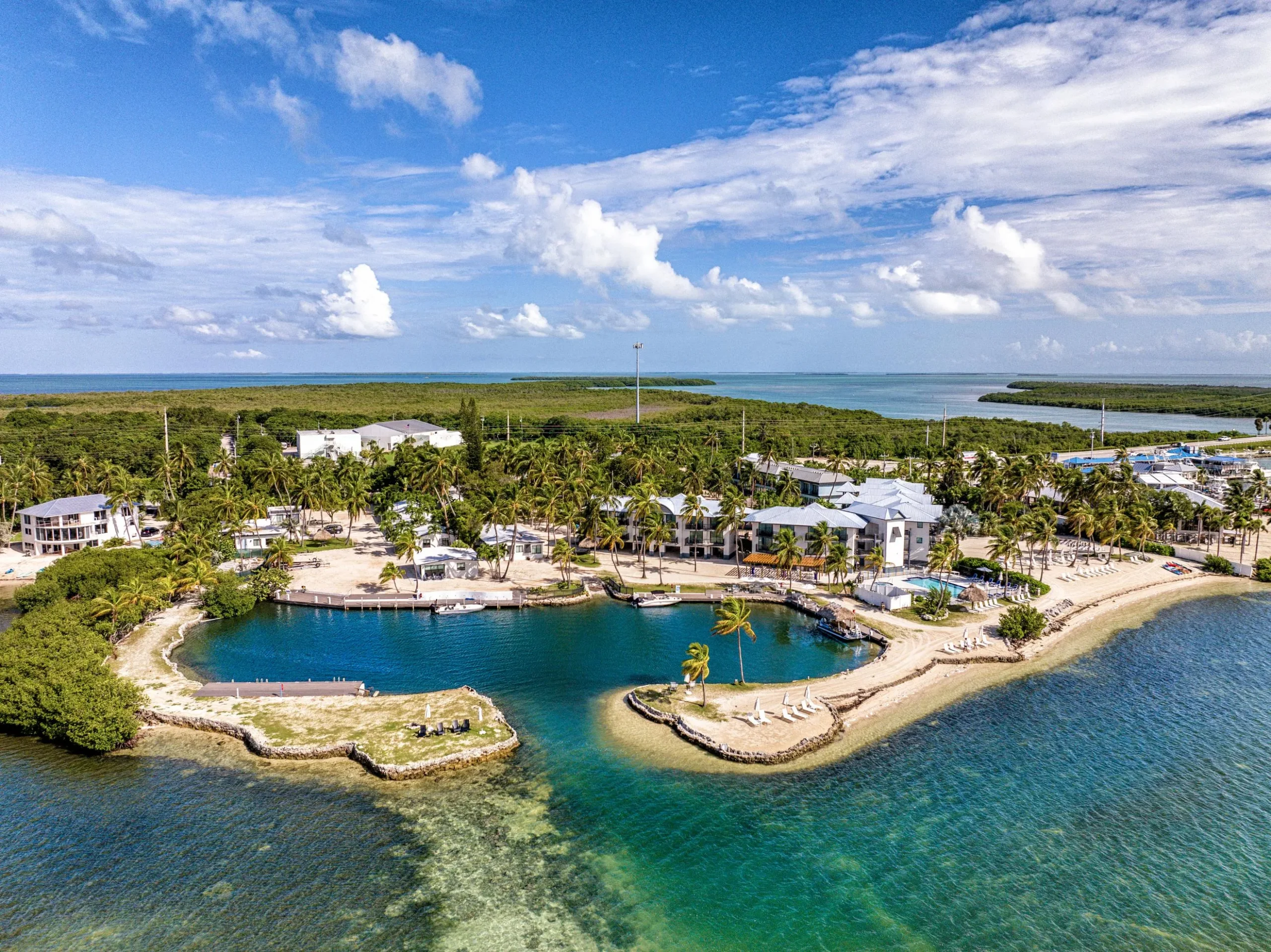
Navigating the landscape of top coastal retreats in America is an exercise in identifying the “perfect edge.” It is a pursuit that requires a rejection of the commoditized “resort” in favor of a deeper, more resilient engagement with the maritime environment. Whether it is the austere beauty of the Maine granite or the tropical transparency of the Florida Keys, the American coast offers a spectrum of experiences that, when chosen with precision, provide a definitive sanctuary. The hallmark of a truly great retreat is its ability to make the traveler feel the scale of the ocean while providing the security of the land—a synthesis that remains the ultimate goal of the modern journey.