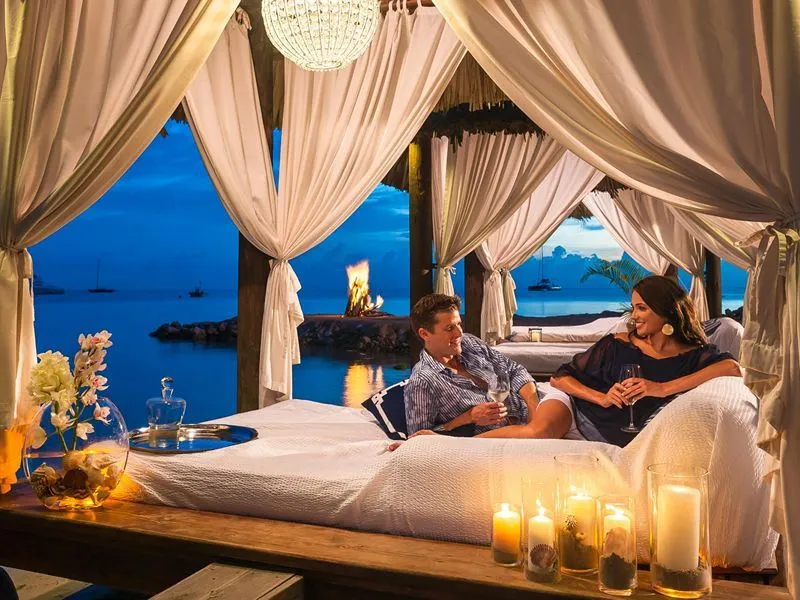
Tropical Honeymoon Examples: A Definitive Guide to Luxury Island Travel
The tropical honeymoon has long functioned as the quintessential archetype of post-marital retreat, yet the contemporary landscape of this travel segment has moved far beyond the binary choice of a beach vs. a resort. At its core, the selection of a tropical destination is an exercise in managing environmental variables, cultural proximity, and logistical infrastructure. For the high-intent traveler, the “tropical” designation is not merely a climate profile but a complex ecosystem of hospitality that must be navigated with precision. The shift toward experiential luxury means that the modern honeymoon is increasingly judged by its “functional serenity”—the ability of the environment and the service layer to operate without friction.
While the aesthetic of the palm-fringed horizon remains a powerful cultural signal, the operational reality of these journeys involves significant strategic planning. Tropical regions, by their nature, present unique challenges: high humidity levels affecting structural integrity and personal comfort, complex micro-climates that can deviate from regional forecasts, and the logistical “last mile” issues common in archipelago or rainforest settings. A definitive analysis of this sector requires looking past the visual tropes to understand the underlying frameworks that allow a destination to serve as a viable theater for long-term memory formation and psychological decompression.
The move toward “deep-travel” has forced a re-evaluation of classic destinations. What were once considered simple island escapes are now analyzed through the lens of biodiversity, architectural integration, and “low-density luxury.” As we examine various tropical honeymoon examples, it becomes clear that the most successful journeys are those that align the couple’s metabolic needs—their desire for activity versus stillness—with the specific rhythmic qualities of the destination. This article serves as a comprehensive reference for that alignment, providing the analytical tools necessary to deconstruct the tropical honeymoon from a strategic and editorial perspective.
Understanding “tropical honeymoon examples”
To analyze tropical honeymoon examples with any degree of sophistication, one must first dismantle the “monolithic” view of the tropics. The tropical belt encompasses everything from the hyper-arid coastal deserts of Baja California to the saturated rainforests of the Amazon and the volcanic archipelagos of the South Pacific. Each of these presents a different “service demand.” A common misunderstanding among planners is the assumption that a high price point automatically mitigates the environmental constraints of the tropics. In reality, some of the most expensive tropical stays require the highest level of guest adaptability regarding insects, humidity, and transit volatility.
Over-simplification often leads travelers to choose a destination based on “Peak Season” statistics without accounting for “Micro-Seasonality.” For instance, a Caribbean island might be statistically beautiful in October, yet that month represents the peak of cyclonic risk. Understanding these examples requires a multi-perspective explanation that weighs “Aesthetic Value” against “Operational Reliability.” A “top-tier” example is one where the infrastructure (power backup, water filtration, medical access) is invisible but robust, allowing the couple to experience the wilderness without the “survival” stressors traditionally associated with remote tropical regions.
Furthermore, the risk of the “Boutique Fallacy” is prevalent in this sector. Travelers often prioritize small, independent properties for their perceived authenticity, only to find that these properties lack the “recovery capacity” of larger, institutional resorts when faced with a systemic failure, such as a localized power outage or a supply chain disruption. Thus, evaluating tropical examples is an exercise in balancing “Narrative Depth” (the story of the place) with “Structural Resilience” (the ability of the place to function under stress).
Contextual Background: The Evolution of the Tropical Escape
The historical trajectory of the tropical honeymoon is inextricably linked to the history of maritime exploration and, later, the expansion of commercial aviation. In the late 19th century, “tropical” travel was primarily the domain of the colonial administrative class, characterized by long-duration steamship journeys and a focus on “acclimatization.” The honeymoon in this era was less about relaxation and more about “beholding” the exotic.

The mid-20th century “Jet Age” democratized the tropics. The 1960s saw the rise of Hawaii and the Caribbean as accessible paradises for the American middle class. This period established the “Resort Model”—a centralized, self-contained environment that provided a sanitized version of the tropics. However, the late 20th century introduced the “Overwater Bungalow” in French Polynesia, a structural innovation that changed the relationship between the guest and the ocean, moving the stay from the beach to the water itself.
Today, we are in the “Post-Resort” era. The focus has shifted toward “Biophilic Design,” where the architecture is meant to disappear into the jungle or the reef. This evolution reflects a broader cultural desire for “unmediated” nature, provided that the mediation of luxury—high-thread-count linens, gourmet cuisine, and climate control—remains perfectly intact.
Conceptual Frameworks: The Architecture of the Island Experience
To evaluate any tropical destination, one can apply these three mental models:
-
The Transit-to-Tranquility Ratio: This measures the total time spent in transit (flights, ferries, seaplanes) against the total duration of the stay. In high-value tropical travel, a ratio higher than 1:5 often leads to “traveler exhaustion,” where the first two days of the honeymoon are spent recovering from the journey rather than enjoying the destination.
-
The “Controlled Wilderness” Spectrum: This identifies where a property sits between “Sanitized” (zero insects, manicured lawns, imported sand) and “Immersive” (natural flora, wildlife interaction, open-air architecture). Understanding where a couple sits on this spectrum is critical for satisfaction.
-
The Metabolic Heat Index: This is a psychological framework rather than a purely physical one. It evaluates how much “effort” is required to experience the destination’s highlights. A destination that requires a 2-hour hike in 90% humidity to reach a “private” beach has a high metabolic cost, which may not align with a couple’s post-wedding fatigue.
Key Categories and Geographic Variations
Tropical honeymoons can be classified into distinct typologies, each with a specific “Value-to-Friction” profile.
| Category | Typical Geography | Primary Trade-off | Service Hallmark |
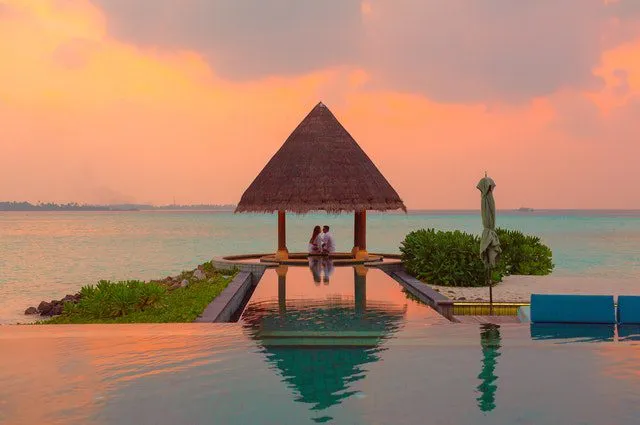
| Archipelagic Luxury | Maldives, Seychelles | High transit friction; total isolation. | Dedicated butler; overwater privacy. |
| Volcanic Seclusion | St. Lucia, Hawaii (Kauai) | Rugged terrain; micro-climate rain. | Dramatic views; adventure-to-relax balance. |
| Jungle Sophisticate | Costa Rica, Bali (Ubud) | High humidity; insect presence. | Wellness/Holistic focus; biophilic rooms. |
| Coastal Arid | Los Cabos, Turks & Caicos | Lack of lush greenery; high sun exposure. | Massive pools; high-end culinary scenes. |
| Cultural Tropical | Thailand (Koh Samui), Vietnam | Busy local infrastructure; noise. | Exceptional service; deep cultural “texture.” |
| Off-Grid Expedition | Raja Ampat, Solomon Islands | Limited medical/comm access; high cost. | Untouched reefs; “End of the World” feel. |
Decision Logic for Selection
The choice between these categories should be dictated by the “Post-Wedding State.” If the wedding was a high-stress, 500-person event, the Archipelagic Luxury model (Maldives) is superior due to its “Low-Cognitive Load.” If the couple finds stasis boring, the Volcanic Seclusion or Jungle Sophisticate models provide the necessary “Dopamine Hits” of exploration.
Detailed Real-World Scenarios
Scenario 1: The Maldivian “Island Hopping” Trap
A couple decides to split their 10-day honeymoon between two different resorts in the Maldives to “see more.”
-
Constraint: Every resort transfer in the Maldives usually requires a return to the capital, Malé, via seaplane.
-
Failure Mode: They lose 6 hours of prime daylight in a hot airport lounge.
-
Second-Order Effect: The “flow” of the honeymoon is broken, and the second resort feels like a “reset” rather than a continuation.
-
Lesson: In archipelagic settings, “Depth over Breadth” is the winning strategy.
Scenario 2: The Costa Rican Rainy Season Gamble
Planning a “Green Season” honeymoon in the Osa Peninsula to save 40% on room rates.
-
Decision Point: The couple accepts that it will rain.
-
Constraint: Extreme rain makes the unpaved “luxury” lodge roads impassable, and small-plane flights are canceled.
-
Result: The couple is stuck in a regional hub for two days.
-
Lesson: Cost-savings in tropical environments often correlate directly with “Systemic Risk.”
Scenario 3: The Overwater Acoustic Reality
A couple chooses an overwater bungalow in a high-wind region of the South Pacific.
-
Context: The aesthetic is perfect for photography.
-
Failure Mode: The slapping of waves against the pylons and the whistling of wind through the thatch makes sleep difficult for “light sleepers.”
-
Outcome: Physical fatigue leads to psychological irritability, undermining the romantic intent.
Economic Dynamics: Cost, Resource Allocation, and Opportunity
The economics of the tropics are governed by “Import Costs.” In remote islands, every bottle of water and every thread of linen is flown or shipped in.
| Expense Category | Premium Range (Daily) | Variability Factors |
| High-Tier Lodging | $1,200 – $5,000 | Seasonality; view-type; pool size. |
| Internal Logistics | $300 – $1,200 | Seaplanes; private speedboats. |
| Curated Dining | $200 – $600 | Alcohol import taxes; “destination” dining fees. |
| Wellness/Activity | $150 – $500 | Specialist guides; spa brand prestige. |
Opportunity Cost: Spending an extra $2,000 to “upgrade” to a slightly better room in a congested resort vs. using that $2,000 to fly to a more remote, lower-density destination. In the tropics, “Density” is the ultimate luxury.
Strategic Support Systems and Navigation Tools
-
Micro-Climate Satellite Apps: Standard weather apps fail in the tropics. Tools like Windy or specialized regional apps provide better “Nowcasting.”
-
Dehydration Monitoring: Often overlooked, the “Tropical Fatigue” felt by honeymooners is frequently mild heat exhaustion.
-
Advanced Insect Mitigation: Beyond sprays, understanding “Electronic Repellents” and “Permethrin-treated” evening wear.
-
Offline Topographic Maps: Essential for jungle regions where GPS signal is attenuated by heavy canopy.
-
Universal Medical Evacuation Insurance: A non-negotiable tool for “Off-Grid Expedition” categories.
-
Humidity-Controlled Storage: Ensuring camera gear and electronics don’t succumb to “Lens Fungus” or internal corrosion.
Risk Landscape: Taxonomy of Failure in Tropical Environments
-
Logistical Fragility: In the tropics, a broken boat engine isn’t an inconvenience; it’s a total cessation of movement.
-
Health Vectors: Beyond the obvious (malaria/dengue), “Reef Cuts” and “Sandfly Dermatitis” are common honeymoon-ruiners that are rarely mentioned in marketing.
-
Service Inconsistency: The “Island Time” phenomenon. While charming in theory, it can lead to frustration when a scheduled 4:00 PM sunset cruise departs at 5:15 PM, missing the light.
-
Environmental Volatility: Rapid-onset squalls that can ruin outdoor wedding dinners or photo sessions within 120 seconds.
Governance and Adaptation: Managing the Itinerary
A tropical honeymoon requires “Dynamic Governance”—the ability to change plans based on real-time environmental feedback.
-
The “Morning Call” Cycle: Every morning at 8:00 AM, evaluate the wind and cloud cover. If the “Boat Day” looks choppy, swap it for a “Spa Day” immediately rather than waiting for the vendor to cancel.
-
Layered Checklist:
-
Hydration Level Check (Daily).
-
Sun Exposure Cumulative Log (To prevent Day 3 burnout).
-
Equipment Integrity Check (Zippers and seals in salt-air environments).
-
Measurement and Evaluation: Quality Signals
How do you know a tropical honeymoon is “High Quality” during the planning phase?
-
Staff-to-Guest Ratio: In the tropics, high-maintenance environments require a ratio of at least 2:1 to keep the property from looking “weathered.”
-
Water Infrastructure: Does the resort have its own desalination and bottling plant? (A signal of self-sufficiency and environmental ethics).
-
Leading Indicator: The responsiveness of the pre-arrival concierge to “environmental” questions (e.g., “What is the current jellyfish status?”).
-
Lagging Indicator: The “Return to Baseline” time. How long after returning does it take for the couple to feel “stressed” again? A successful honeymoon provides a 3–4 week “buffer.”
Common Misconceptions and Systemic Oversimplifications
-
Myth: All islands have great beaches. Correction: Many high-end tropical volcanic islands (like parts of Bali or the Azores) have rocky, unswimmable shores; the “luxury” is in the view and the pools.
-
Myth: The more remote, the more romantic. Correction: Remoteness can lead to “Boredom Friction” if the couple hasn’t practiced “Shared Silence.”
-
Myth: “All-Inclusive” is always better. Correction: In many tropical hubs (like Thailand), the local food scene is 50% of the value; “All-Inclusive” traps you in a culinary monoculture.
-
Myth: Tropical means “hot and sunny” 24/7. Correction: Tropical nights can be surprisingly chilly in the highlands, and the humidity makes 80°F feel like 95°F.
Ethical and Sustainability Considerations
The “Tropical Paradox” is that the more pristine a destination, the more its presence as a tourist hub threatens that purity. Sustainable tropical honeymoon examples are those that engage in “Blue Carbon” initiatives (seagrass/mangrove restoration) and employ 90%+ local staff in management positions, not just service roles. Travelers should look for “Circular Systems” where food waste is composted for on-site organic gardens, reducing the carbon footprint of imported produce.
Conclusion: The Future of Remote Romantic Hospitality
The trajectory of the tropical honeymoon is moving away from “The Grand Resort” and toward “The Specific Sanctuary.” As global temperatures rise and weather patterns become more erratic, the value of the “Climate-Resilient” stay will increase. This means properties built with traditional cooling techniques (passive ventilation) and robust local food systems will become the new standard of luxury.
Ultimately, a tropical honeymoon is a high-stakes investment in emotional capital. Success is not found in the absence of rain or insects, but in the presence of an infrastructure that makes those elements irrelevant to the couple’s experience. The future traveler will prize “Thermal Comfort” and “Acoustic Privacy” over gold-plated faucets. By applying a rigorous, analytical lens to the selection process, a couple can ensure that their tropical escape is not just a vacation, but a definitive, resilient start to their shared narrative.