Common Honeymoon Packing Mistakes: The Definitive Editorial Guide
The honeymoon is frequently characterized as the ultimate reprieve following the administrative and emotional intensity of a wedding. However, this transition from the highly structured environment of event planning to the supposedly fluid nature of international travel creates a unique psychological blind spot. Preparation for this journey is often relegated to the final, most exhausted days of the wedding countdown, leading to systemic failures in logistical preparation. Packing, while appearing to be a mundane task of item selection, is actually an exercise in predictive modeling—one where the traveler must anticipate environmental variables, social requirements, and physical needs across disparate geographies.
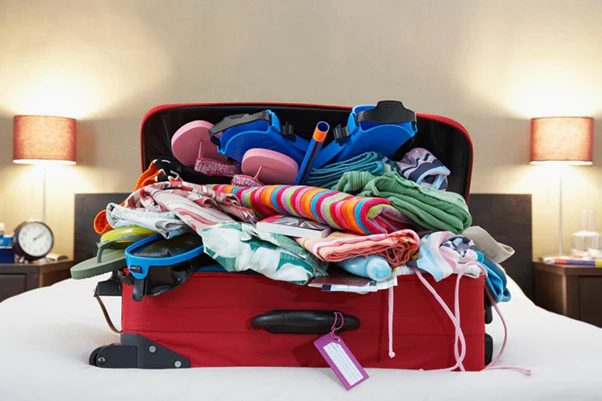
When baggage is packed under conditions of cognitive fatigue, the result is rarely a lack of items, but rather a lack of cohesion. The “expectation-reality gap” in honeymoon travel is often bridged by over-packing—a defensive mechanism that attempts to mitigate anxiety through volume. This strategy backfires when the physical burden of excessive luggage encounters the realities of small-island transfers, cobblestone European streets, or multi-modal transit. A sophisticated approach to packing requires moving beyond the checklist and toward an understanding of the “total weight of the experience,” including the cognitive load of managing unnecessary possessions.
To produce a resilient travel plan, one must view packing as a subset of risk management. Every item included represents a commitment of space, weight, and mental energy. Conversely, every item omitted represents a potential friction point or an unexpected expense at the destination. The objective is to achieve “Optimal Utility”—the state where every possession serves a multi-functional purpose and addresses a specific environmental or situational probability. By deconstructing the foundational errors made during this process, we can establish a framework for travel that prioritizes presence and ease over material redundancy.
Understanding “common honeymoon packing mistakes”
To categorize common honeymoon packing mistakes, one must look beyond the simple omission of a toothbrush or a charger. These errors are typically rooted in a failure of situational forecasting. A multi-perspective explanation reveals that mistakes occur at the intersection of “Identity Projection” (packing for who you wish to be on vacation) and “Operational Ignorance” (not understanding the physical constraints of the destination). For instance, packing heavy, structured evening wear for a tropical destination ignores the physiological reality of high humidity and the lack of professional pressing services in remote eco-lodges.
Oversimplification in this field often leads travelers to follow generic “vacation lists” that fail to account for the specific metabolic and social needs of a honeymoon. A honeymoon is not a standard vacation; it involves a higher frequency of transition between “high-activity” (adventure/transit) and “high-aesthetic” (fine dining/celebration) states. The mistake is often failing to bridge these states with versatile, technical fabrics, instead packing two distinct and incompatible wardrobes. This redundancy inflates luggage volume without increasing functional options.

There is also the “Just-in-Case” fallacy, which represents the most significant drain on baggage efficiency. This is the tendency to pack for low-probability events—such as a sudden black-tie gala on a hiking trip—at the expense of daily comfort. When we analyze these mistakes from a systems perspective, we see that they create a “Friction Tax” on the couple. Extra bags lead to longer wait times at carousels, higher vulnerability to theft, and increased physical strain during transit, all of which serve as stressors that counteract the restorative goal of the journey.
Contextual Evolution: From Trunks to Technical Gear
The historical trajectory of travel packing reflects broader shifts in transportation and class dynamics. In the 19th-century “Grand Tour” era, packing was an exercise in semi-permanent relocation. Travelers moved with massive steamer trunks, often accompanied by staff who managed the physical burden. The honeymoon in this context was a slow, deliberate migration where the “mistake” was having too few options for various social strata.
The mid-20th century “Jet Age” introduced the first major constraint: the aircraft hold. As commercial aviation democratized, the physical volume of luggage began to shrink, but the “Packing Philosophy” lagged behind. People still packed for an era of leisure that no longer matched the pace of modern flight. Today, we are in the “Technical Era,” where the development of high-performance, lightweight textiles and the rise of ultra-low-cost carriers (ULCCs) have made “Minimalism” a logistical necessity. The modern mistake is not the lack of a trunk, but the failure to utilize the high-efficiency tools now available, leading to a modern traveler who carries 19th-century volumes with 21st-century mobility needs.
Conceptual Frameworks for Inventory Selection
Evaluating a packing list requires more than a cursory glance; it requires a mental model that filters for utility.
-
The “Three-Use” Rule: Every item, with the exception of specialized safety gear or formal wear, must be capable of being worn in at least three different social or environmental contexts. A shirt that only works with one specific pair of trousers is a logistical liability.
-
The “First-Mile/Last-Mile” Metric: This framework evaluates an item based on the effort required to transport it from the airport to the final destination. If an item is too heavy for a 15-minute walk on uneven terrain, it fails the “Last-Mile” test and should be reconsidered.
-
The “Replacement Cost vs. Probability” Matrix: This compares the likelihood of needing an item against the difficulty of buying it at the destination. Packing a massive bottle of basic sunscreen for a trip to a coastal city is a mistake; the replacement cost is low and the probability of availability is 100%.
Taxonomy of Packing Errors and Categorical Trade-offs
Errors can be broadly categorized into “Volume Failures,” “Technical Failures,” and “Documentation Failures.”
| Category | Typical Manifestation | Primary Trade-off | Resultant Friction |
| Volume Redundancy | Packing 14 outfits for a 7-day trip. | Choice vs. Mobility. | High baggage fees; physical fatigue. |
| Climate Mismatch | Heavy denim in the tropics; no layers in the desert. | Aesthetic vs. Physiology. | Heat exhaustion; inability to participate. |
| Footwear Overload | Bringing 5+ pairs of shoes for different “vibes.” | Variety vs. Weight. | 40% of bag volume consumed by dead weight. |
| Tech Incompatibility | Wrong adapters; no power banks for remote areas. | Connectivity vs. Weight. | Disconnected in critical moments; device death. |
| Document Omission | No physical copies of visas or health records. | Security vs. Bulk. | Denied entry; logistical “hard-stop.” |
Decision Logic for Selection
The selection of items should follow a “Constraint-First” logic. Rather than asking “What might I need?”, the question should be “What is the smallest amount of equipment required to navigate the most likely scenarios?” This shift from additive packing to subtractive packing is the hallmark of the experienced traveler.
Real-World Scenarios: From Success to Systemic Failure
Scenario 1: The “Formal Wear” Anchor
A couple traveling to the Amalfi Coast packs heavy suits and evening gowns for a single planned dinner at a Michelin-starred restaurant.
-
Constraint: The trip involves multiple ferry transfers and steep, narrow staircases to reach their villa.
-
Failure Mode: The specialized garment bags make it impossible for them to manage their own luggage. They miss a ferry connection because they cannot navigate the crowd with the bulky items.
-
Lesson: The “Aesthetic High” of a single meal was negated by the “Logistical Low” of the transit days.
Scenario 2: The “Technical Fabric” Success
A couple on a 10-day tour of Japan packs only carry-on luggage using merino wool and synthetic blends.
-
Context: They encounter an unseasonable heatwave followed by heavy rain.
-
Outcome: Their clothes dry overnight in a hotel room and resist odor. They easily navigate the subway system and change hotels four times without stress.
-
Lesson: Material science is a force-multiplier for travel comfort.
Scenario 3: The “Medication Gap”
Packing a honeymoon in a remote part of Indonesia, the couple forgets to bring a basic “Gastro-Intestinal” kit, assuming the resort will have it.
-
Failure Mode: Both experience mild food poisoning. The resort is 3 hours from the nearest pharmacy.
-
Outcome: Two days of the honeymoon are spent in misery rather than on the beach.
-
Lesson: In remote areas, “Medical Self-Sufficiency” is the only reliable support system.
Economics of Luggage: Direct and Opportunity Costs
The cost of packing mistakes is rarely just the price of the items. It is a compounding economic drain.
| Expense Type | Direct Cost Range | Opportunity Cost |
| Baggage Fees | $50 – $300 | Funds that could have been used for an upgrade or excursion. |
| Local Procurement | 150% – 200% of MSRP | Time spent shopping in a pharmacy instead of exploring. |
| Physical Toll | N/A | Reduced energy for hiking or evening activities. |
| Logistical Delays | $100+ (Taxis/Porters) | Loss of “spontaneous mobility”—the ability to take a bus or walk. |
Opportunity Cost Analysis: If it takes 30 minutes extra per day to manage, pack, and organize excessive luggage, on a 10-day honeymoon, the couple loses 5 hours of prime leisure time. At an average honeymoon “daily cost” of $500, those 5 hours represent a $100+ loss in “Experience Value.”
Support Systems and Strategic Packing Tools
-
Compression Packing Cubes: These are not just for organization; they act as a “Volume Governor.” If it doesn’t fit in the assigned cube, it doesn’t go in the bag.
-
Digital Document Vaults: Encrypted cloud storage (and physical backups) for passports, insurance, and vaccination records.
-
Weight Sensors: Small, portable luggage scales to prevent “Check-in Anxiety.”
-
Universal Power Blocks: Single units that handle multiple plug types and provide high-wattage USB-C charging.
-
Solid Toiletries: Shampoo bars and solid colognes eliminate the risk of “The Spill”—a failure mode that can ruin an entire wardrobe.
-
The “Sacrificial Bag”: A lightweight, foldable tote for laundry or souvenirs acquired at the destination.
The Risk Landscape: Compounding Logistical Failures
Packing mistakes are rarely isolated; they tend to trigger “Failure Cascades.”
-
The Weight-Injury Link: An over-packed bag leads to a strained back, which leads to a sedentary honeymoon, which leads to psychological dissatisfaction.
-
The Spill-Contamination Cycle: A poorly sealed bottle of red wine or sunblock ruins the “One Nice Outfit,” forcing an emergency high-cost purchase in a tourist-trap boutique.
-
The Tech-Dependency Failure: Relying entirely on a phone for navigation without a physical backup or a dedicated power bank. If the phone dies in a foreign city at night, the “Honeymoon Vibe” is replaced by a “Survival Scenario.”
Governance and Adaptation: The Iterative Packing Cycle
Packing is not a “one-and-done” event. It requires a “Maintenance Phase” during the trip itself.
-
The “Dirty Laundry” Barrier: Systematically separating used items to prevent odor contamination and to keep the “Ready-to-Wear” inventory clear.
-
The Mid-Trip Review: On Day 5, evaluate what hasn’t been worn. If it hasn’t been used yet, it likely won’t be. This informs future “Governance” of your packing lists.
-
Adjustment Triggers: If the weather forecast shifts 48 hours before departure, the list must be radically adapted. A “Rigid List” is a primary cause of common honeymoon packing mistakes.
Measurement and Evaluation of Packing Efficiency
How do you know if you “won” at packing?
-
The “Staircase Test”: Can both individuals carry all their own gear up two flights of stairs without assistance? If no, the volume is too high.
-
The “Unworn Ratio”: Upon return, count the items that were never used. A successful trip should have a ratio of less than 10%.
-
Leading Indicator: The “Stress Level at the Check-in Counter.” If you are worried about weight, you have already failed the planning phase.
-
Qualitative Signal: The “Ease of Spontaneity.” If a local tells you about a cool hidden beach a mile away, can you go there immediately, or are you “trapped” by your bags?
Common Misconceptions and Industry Myths
-
Myth: “I’ll just wash it there.” Correction: Laundry services in high-end resorts can cost $10 per shirt and take 24 hours. Unless you are washing it in a sink, “Laundry” is not a budget or time saver.
-
Myth: “I need a different pair of shoes for every outfit.” Correction: Two pairs (one technical/walking, one versatile/formal) are sufficient for 95% of all honeymoon scenarios.
-
Myth: “Rolling clothes prevents all wrinkles.” Correction: Rolling saves space, but “Bundle Packing” prevents wrinkles. For formal items, physics always wins over “hacks.”
-
Myth: “The more I pack, the more prepared I am.” Correction: Preparedness is a state of mind and a kit of versatile tools, not a volume of “stuff.”
Ethical and Sustainability Considerations in Consumption
Packing is also an ethical choice. The “Disposable Travel” culture—buying cheap clothes and toiletries to leave behind—is a significant environmental burden on island and remote economies.
-
Micro-Plastic Mitigation: Using laundry bags that catch synthetic fibers when washing technical gear.
-
Concentrated Toiletries: Reducing plastic waste by using concentrated solids that last longer and take up 90% less space.
-
Durability as Ethics: Investing in high-quality gear that lasts for decades of travel, rather than “fast-fashion” items that fail after one trip.
Conclusion: The Synthesis of Utility and Intent
A honeymoon is a rare opportunity for total presence with a partner. Any physical or mental energy diverted to the management of “stuff” is a direct subtraction from that presence. By identifying and correcting common honeymoon packing mistakes, travelers move from a state of “Reactive Packing” to “Strategic Curation.” The goal is not to see how little one can bring, but to see how much freedom one can buy through the intelligent selection of a few, high-performance items.
Ultimately, the best-packed bag is the one you forget you are carrying. It supports your journey silently, providing the exact tool you need at the exact moment you need it, and then disappears back into its cube. This level of logistical mastery allows the focus of the honeymoon to remain where it belongs: on the shared experience of a new horizon, unburdened by the weight of the unnecessary.