How to Avoid Tourist Traps: A Definitive Guide to Authentic Travel
The modern travel landscape is increasingly defined by a tension between the curated convenience of mass tourism and the pursuit of genuine cultural immersion. As global mobility has expanded, so too has the sophistication of the “tourist trap”—a commercial ecosystem designed to extract maximum capital from travelers by offering high-friction, low-value experiences that mimic authenticity without delivering it. Understanding the mechanics of these environments requires an analytical approach that looks past the neon signage and aggressive street-level solicitation. It is not merely a matter of geography, but of economic incentive and psychological engineering.
To navigate this landscape effectively, one must recognize that tourist traps are rarely accidental. They are often the logical outcome of a location’s inability to scale its genuine resources against an overwhelming volume of visitors. When a site becomes a “must-see” destination, the local economy frequently shifts from sustainable hospitality to high-velocity extraction. The result is a standardized experience where regional nuances are flattened into digestible, overpriced caricatures. This homogenization serves the provider by lowering operational costs while exploiting the traveler’s limited time and cultural unfamiliarity.
Developing a strategy for how to avoid tourist traps involves more than just a list of “off-the-beaten-path” locations. It requires a fundamental shift in how one evaluates value, interprets social proof, and manages the logistics of exploration. True travel mastery is found in the ability to distinguish between a site that is popular because of its intrinsic historical or aesthetic value and a site that is popular simply because it has optimized its position within a commercial funnel. This article examines the structural, psychological, and logistical frameworks necessary to insulate a journey from the erosion of quality inherent in mass-market tourism.
Understanding “how to avoid tourist traps”
The phrase is often reduced to a simple binary: “don’t go to popular places.” This is an oversimplification that risks missing some of the world’s most significant cultural landmarks. A tourist trap is not defined by the number of people present, but by the ratio of price to quality and the presence of deceptive marketing. A centuries-old cathedral with a crowd is a landmark; a restaurant next to that cathedral serving frozen, pre-packaged pasta at three times the local market rate is a trap.
To master how to avoid tourist traps, one must adopt a multi-perspective view. From an economic standpoint, these traps thrive on “one-off” customers. Unlike a local neighborhood bistro that survives on repeat business and must maintain quality to ensure its reputation, a business in a high-traffic transit hub or near a famous monument assumes it will never see the customer again. This lack of a feedback loop allows for the degradation of service and product.
There is also a psychological dimension. Travelers often fall victim to “choice paralysis” or “decision fatigue” in unfamiliar environments. In this state, the mind gravitates toward the most visible, least-threatening option—often the one with a translated menu and a brightly lit facade. Understanding this instinct is the first step toward bypassing it. The challenge is not just finding the “hidden gems,” but developing the discernment to see when a “gem” is actually a carefully constructed facade designed to lure those seeking an “authentic” experience.
The Historical and Systemic Evolution of Extraction Sites
The concept of the tourist trap has evolved alongside the infrastructure of travel itself. In the era of the Grand Tour, “traps” were limited to aggressive local guides or inflated prices at coaching inns. However, the advent of mass aviation and the digital “recommendation economy” changed the scale. As travel became democratized, the “honey pot” effect intensified. Urban centers began to develop “tourist zones”—areas where the local population no longer lives or shops, creating a vacuum that is filled by souvenir shops and international chains.
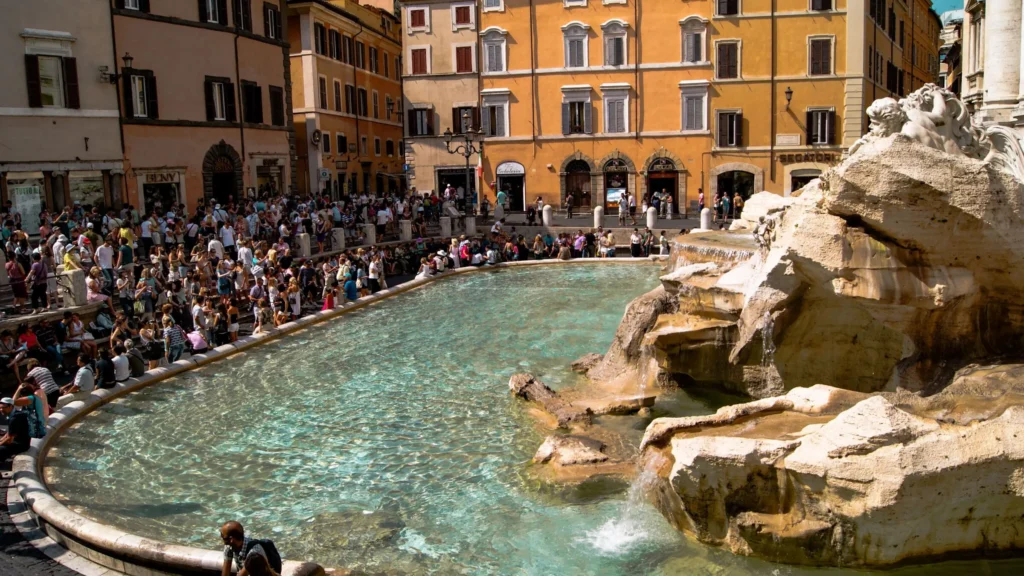
Systemically, these zones are often supported by municipal zoning and high-yield commercial leases. In cities like Venice, Florence, or Prague, the rising cost of real estate in the historical core forces out traditional artisans and family-run grocers. They are replaced by high-margin businesses that can afford the rent by selling standardized goods to thousands of people a day. This is a form of commercial gentrification that creates a feedback loop: as the area becomes more “trapped,” the authentic culture recedes further, making the remaining “traps” the only options visible to the uninitiated visitor.
Conceptual Frameworks and Mental Models
To navigate these complexities, several mental models can be applied to evaluate any given environment.
The Feedback Loop Model
Assess whether a business relies on repeat customers (locals) or transient visitors (tourists). A shop located on a major thoroughfare with no surrounding residential housing is structurally incentivized to prioritize margin over quality.
The “Menu in Five Languages” Heuristic
While helpful for communication, a menu or sign displayed in multiple languages—especially with photos of the food—is a leading indicator of a high-volume, low-quality operation. It signals that the business is optimizing for the lowest common denominator of accessibility rather than culinary or craft excellence.
The Geographic Displacement Principle
Authenticity and value tend to exist in a direct inverse relationship with proximity to a major “anchor” attraction. By moving just two to three streets away from a main square or monument, the economic pressure of high rent drops significantly, allowing businesses to operate with a focus on quality and local patronage.
Key Categories of Commercial Funnels
Understanding the specific types of traps allows for targeted avoidance strategies.
| Category | Primary Mechanism | Trade-off |
| The Culinary Funnel | Strategically located restaurants with aggressive “pullers” outside. | Extreme convenience vs. poor quality/high price. |
| The Souvenir Factory | Mass-produced goods claimed to be “local” or “handcrafted.” | Low effort acquisition vs. zero cultural or resale value. |
| The Guided Monopoly | Tours that lead to “partner” workshops where high-pressure sales occur. | Low cost of tour vs. expected high-ticket purchase (carpets, jewelry). |
| The Transit Tax | Unregulated taxis or “private” transfers in high-traffic zones. | Immediate departure vs. 3x–5x market rate. |
| The ‘Free’ Encounter | Offering “free” gifts (bracelets, flowers) then demanding payment. | Social politeness vs. aggressive extortion. |
Detailed Real-World Scenarios
Scenario: The High-Pressure Workshop Visit
In many historic regions, “free” or subsidized city tours are offered by hotels or street agencies. These tours frequently include a stop at a “traditional” weaving or pottery center.
-
The Trap: The demonstration is brief, followed by being led into a showroom with high-pressure sales staff and “special discounts.”
-
The Avoidance: Research independent workshops ahead of time. If on a tour, set a firm boundary that you will not be making purchases and use the time to observe the surrounding neighborhood instead.
Scenario: The Iconic Square Cafe
Sitting in a world-famous square for coffee seems like a classic experience.
-
The Trap: Many such cafes charge a “sitting fee” or a massively inflated price for “table service” compared to “bar service.”
-
The Avoidance: Stand at the bar like a local (often 50% cheaper) or walk three blocks to a side street where you can enjoy the same coffee without the “view tax.”
Planning, Cost, and Resource Dynamics
Learning how to avoid tourist traps does not necessarily make a trip cheaper in terms of “time currency,” though it almost always saves money. There is a “convenience cost” to finding quality.
Resource Allocation for Authentic Travel
| Resource | Trapped Experience | Authentic Experience |
| Time (Planning) | Minimal (Follow the signs). | High (Research, mapping, local blogs). |
| Financial Cost | High (Inflated prices). | Moderate (Market rates, but transport may cost more). |
| Cognitive Load | Low (Everything is in English/Easy). | High (Navigating language, local customs). |
| Social Reward | Shallow (The same photo as everyone else). | Deep (Unique stories, genuine connections). |
Tools, Strategies, and Support Systems
-
Hyper-Local Digital Maps: Use apps that are popular in the specific country rather than global review sites, which are often skewed by tourists who don’t know better.
-
The “Lunch Special” Strategy: Visit high-end restaurants during lunch hours when they often serve a set menu for locals at a fraction of the dinner price.
-
Public Transit Integration: Master the local rail or bus system. Tourist traps thrive on the “last mile” of travel where people give up and take an overpriced taxi.
-
Secondary Cities: If a primary city is overwhelmed (e.g., Amsterdam), spend 70% of your time in a secondary city (e.g., Utrecht) that offers similar architecture and culture without the extraction-focused economy.
Risk Landscape and Failure Modes
Attempts to avoid traps can lead to their own risks if not managed with common sense. “Going off the beaten path” can lead to safety concerns in certain regions or the loss of significant time due to poor infrastructure. The goal is “calculated divergence”—leaving the commercial funnel without abandoning the safety and support structures of modern travel.
A common failure mode is “The Purity Trap”—the belief that any place with tourists is inherently bad. This leads travelers to miss world-class museums or historical sites out of a misplaced sense of snobbery. The objective is to enjoy the attraction while avoiding the industry built to exploit visitors to that attraction.
Governance and Long-Term Adaptation
Travelers should maintain a personal “vetting process” for destinations. This involves checking recent (last 3-6 months) reports on local scams, which often evolve seasonally. A layered checklist for evaluating a business on the fly includes:
-
Are there menus in the local language?
-
Are the people dining there predominantly local?
-
Is the business owner present and engaged?
-
Does the business exist in local-focused directories?
Measurement, Tracking, and Evaluation
Evaluating the “authenticity” of a trip can be done through qualitative signals:
-
The Interaction Ratio: How many of your daily interactions were commercial vs. social?
-
The Price Variance: How close did your daily spending align with the local cost of living index?
-
The “Standard Photo” Count: How many of your experiences were unique to your path vs. replications of popular social media posts?
Common Misconceptions and Oversimplifications
-
Myth: Street food is always a trap/unsafe. Fact: In many cultures, street food is the most authentic and highest-turnover (and thus freshest) food available.
-
Myth: You have to speak the language to avoid traps. Fact: A few key phrases and a respectful attitude are usually enough to signal that you aren’t a “typical” mark.
-
Myth: All souvenirs are junk. Fact: Specialized workshops and museum shops often offer genuine, high-quality replicas or local crafts.
Conclusion: The Synthesis of Judgment
Ultimately, the ability to navigate a foreign environment without falling into commercial traps is a skill developed through observation and intellectual honesty. It requires a willingness to be slightly uncomfortable and a commitment to seeing a culture on its own terms rather than as a product for consumption. By understanding the economic and psychological structures of the tourist industry, a traveler can move through the world with a sense of autonomy, ensuring that their resources support the preservation of genuine culture rather than its commodification.