Common Honeymoon Planning Mistakes: A Definitive Editorial Guide
The honeymoon is often characterized in popular culture as a seamless extension of the wedding’s euphoria, yet from an editorial and logistical perspective, it is one of the most high-pressure travel events an individual will ever manage. Unlike a standard vacation, the honeymoon carries a heavy burden of symbolic significance and emotional expectation. This weight creates a unique psychological environment where small logistical oversights are magnified, potentially clouding the beginning of a domestic partnership with unnecessary friction. The complexity of the task stems from the need to synchronize two distinct sets of desires, energy levels, and risk tolerances within a period that follows an intense period of social and financial exertion.
To approach this topic with the necessary depth, one must look past the superficial advice found in bridal magazines. Planning a honeymoon is essentially an exercise in resource management—balancing time, capital, and emotional bandwidth. The modern landscape of global travel, characterized by volatile pricing, fluctuating geopolitical stability, and the commodification of “authentic” experiences, has made the process more difficult than in previous decades. It is no longer enough to choose a destination; one must navigate a labyrinth of tiered service models, non-refundable deposits, and localized seasonal variables that can transform a dream itinerary into a series of managed crises.
The systemic failure of many honeymoons begins months before the departure date, rooted in a lack of strategic alignment. There is a common tendency to treat the honeymoon as a “reward” for surviving the wedding, which leads to a dangerous relaxation of critical thinking during the planning phase. When couples fail to apply a rigorous framework to their travel choices, they become vulnerable to marketing narratives that prioritize aesthetic appeal over functional reality. This article serves as an analytical autopsy of the most frequent points of failure, providing a definitive reference for those seeking to build a resilient and restorative post-wedding journey.
Ultimately, the objective is to move from a state of reactive planning to one of proactive architecture. By deconstructing the mechanics of travel failure—from the “recovery delta” required after a wedding to the second-order effects of over-scheduling—we can establish a more sophisticated model for honeymoon design. This requires an intellectual honesty about one’s own limitations and a willingness to prioritize structural integrity over the “perfect” photograph. The following analysis explores these dynamics with the patience and nuance that a lifelong commitment deserves.
Understanding “common honeymoon planning mistakes”
When we speak of common honeymoon planning mistakes, we are not merely discussing missed flights or poor hotel choices; we are discussing the failure to align logistical reality with psychological needs. The most frequent misunderstanding is that “more” equals “better”—more destinations, more activities, more luxury. In reality, the honeymoon is a period of transition where the primary value is often found in the reduction of complexity. A primary mistake is the “Intensity Overlap,” where couples plan a high-octane expedition immediately following a high-stress wedding, failing to account for the physical and cognitive exhaustion inherent in modern nuptials.
To effectively audit common honeymoon planning mistakes, we must examine them through three lenses:
-
The Temporal Error: Miscalculating the “Recovery Delta.” Many couples depart the morning after their wedding, realizing too late that they are too exhausted to enjoy the first 48 hours of their journey. This is a failure of tempo management.
-
The Resource Misallocation: Spending the entirety of the budget on the “hard” assets—flights and rooms—while neglecting the “soft” assets that actually drive experience quality, such as private transfers, high-quality dining, and localized expertise.
-
The Consensus Gap: The assumption that a shared love for a destination implies a shared vision of the daily itinerary. Without a granular discussion on the ratio of “action” to “stillness,” one partner inevitably feels neglected while the other feels bored.
The oversimplification risk here is treating the honeymoon like any other vacation. Standard travel planning often prioritizes “seeing” the world; honeymoon planning must prioritize “being” in the world. When couples fall into the trap of feature-counting—choosing a resort because it has six pools instead of one—they often overlook the structural flaws that truly impact happiness, such as the staff-to-guest ratio or the acoustic privacy of the suites.
The Evolution of the Honeymoon as a Socio-Economic Construct
The honeymoon has transformed from a 19th-century “bridal tour”—where the couple visited relatives who couldn’t attend the wedding—into a highly individualized expression of identity. In the mid-20th century, the rise of the “Grand Hotel” and tropical tourism turned the honeymoon into a commodified rite of passage. Today, we are in the era of the “experiential honeymoon,” where the goal is no longer just rest, but the acquisition of unique cultural capital.

This evolution has introduced new pressures. The digital age has created a “comparative anxiety,” where couples feel compelled to match the curated itineraries seen on social platforms. This systemic pressure is the root cause of many contemporary planning errors, as it pushes couples toward “Instagrammable” destinations that may lack the infrastructure or climate stability to support a reliable experience. Understanding that the honeymoon is a private psychological reset, not a public performance, is the first step in avoiding the traps of modern travel marketing.
Mental Models for High-Stakes Travel Planning
Applying rigorous frameworks to the planning process can insulate a couple from emotional decision-making.
The Recovery Delta Framework
This model posits that the energy required to enjoy a destination must be proportional to the energy remaining after the wedding. If the wedding is a “Level 9” stress event, the first three days of the honeymoon should be “Level 2” intensity. This prevents “Burnout Bounce,” where the couple spends the first half of their trip merely sleeping and recovering.
The “Single Point of Failure” Analysis
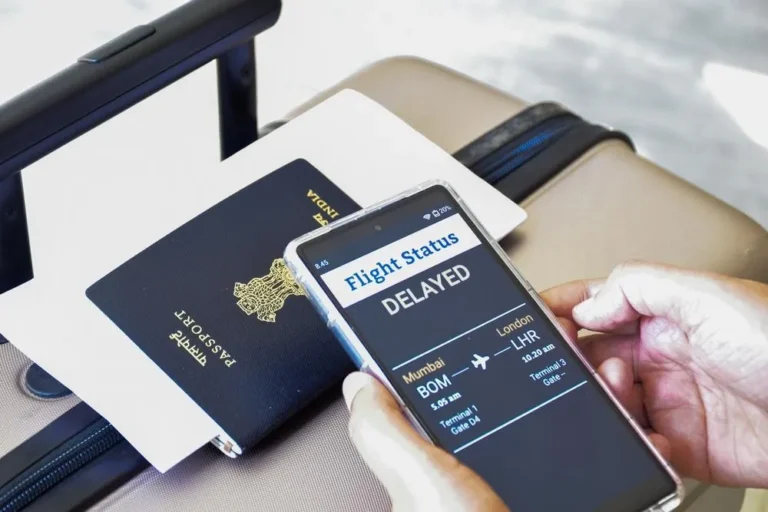
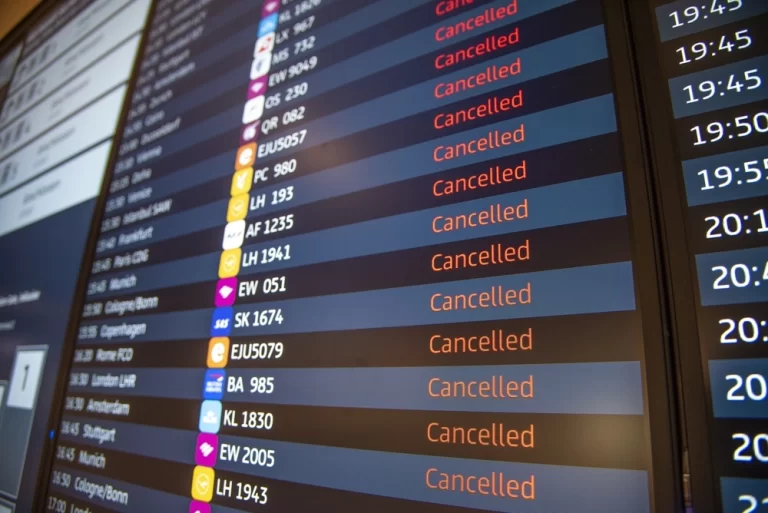
In high-stakes travel, every “moving part” is a potential failure point. A three-city itinerary involves six flights/trains, three check-ins, and multiple ground transfers. By identifying the single most fragile link—such as a 45-minute layover in a notoriously delayed airport—couples can build in redundancies or choose simpler, more robust paths.
The Law of Diminishing Marginal Joy
This economic principle applies to travel density. The first four days in a new city are typically high-value. By day six, the novelty fades, and the logistical friction of staying in one place begins to outweigh the benefits. Conversely, moving too quickly (the “Hyper-Mobility Trap”) ensures that you spend more time in transit than in the destination.
Taxonomy of Planning Variations and Functional Trade-offs
The “best” honeymoon plan does not exist; only the plan that best manages specific trade-offs.
| Planning Style | Primary Benefit | Typical Trade-off | Success Requirement |
| The Monolithic Stay | Maximum Rest / Depth | Potential Boredom | High-End Resort Infrastructure |
| The Grand Expedition | High Story Equity | Logistical Fatigue | Professional Ground Support |
| The Unstructured Roam | High Autonomy | Decision Fatigue | Tolerance for Variance |
| The Multi-Modal Trip | Variety of Environments | Complexity & Risk | Rigorous “Single Point of Failure” Audit |
| The Digital Detox | Psychological Reset | High Withdrawal/Anxiety | Pre-Trip Boundary Setting |
Realistic Decision Logic
When choosing a style, the couple should ask: “Are we trying to escape from something (the wedding stress) or to something (a new experience)?” Escape-from honeymoons require monolithic stays; escape-to honeymoons allow for expeditions.
Operational Realities: Scenario Analysis
Scenario A: The Multi-Stop European Tour
A couple plans to visit London, Paris, and Rome in 10 days.
-
The Mistake: Underestimating the “Door-to-Door” travel time. A two-hour flight actually consumes six hours when accounting for check-out, security, transit, and check-in.
-
The Failure Mode: The couple arrives at their final destination, Rome, too exhausted to engage with the culture, leading to resentment and a sense of “missed opportunity.”
Scenario B: The Exotic Island “Deal”
Choosing a remote island in the Maldives or South Pacific based on a discount.
-
The Mistake: Ignoring the “Transit Cost.” A cheaper room often means a 4-hour boat ride or an expensive, weather-dependent seaplane transfer.
-
The Second-Order Effect: If a storm hits, the couple may be trapped on an island they only marginally liked because of the price, with no ability to pivot.
Economic Dynamics: Capital Allocation and Opportunity Costs
The most resilient honeymoons are those where the budget is allocated strategically rather than evenly.
Range-Based Resource Allocation
| Expense Category | Percentage of Budget | Strategy |
| Transport (Long Haul) | 30% – 40% | Prioritize direct flights to preserve energy. |
| Accommodation | 30% – 40% | Invest in the “Recovery Phase” (first 3 days). |
| Daily Operations | 15% – 20% | Budget for private cars to reduce friction. |
| Contingency Fund | 10% | The “Get Out of Trouble” money. |
The “Opportunity Cost” of a luxury hotel is often the ability to afford unique, high-value experiences. However, the opportunity cost of a cheap hotel is often a good night’s sleep and emotional safety. The balance must be intentional.
Support Systems and Decision-Support Strategies
-
The “Buffer Day”: Scheduling 24 hours at home between the wedding and the honeymoon. This allows for packing, banking, and psychological transition.
-
Tiered Itineraries: Having a “Must Do,” “Would Like to Do,” and “If We Feel Like It” list. This removes the pressure of completing a checklist.
-
The “Off-Grid” Protocol: An agreement on when and how to use mobile devices, preventing “Shadow Presence”—where a partner is physically present but digitally elsewhere.
-
Specialist Consultation: Utilizing a travel designer who understands the “on-the-ground” reality of a destination, rather than relying on algorithmic aggregators.
Risk Landscapes: Compounding Vulnerabilities
Travel risk is rarely a single event; it is a chain of compounding vulnerabilities.
-
The Seasonal Variable: Booking “shoulder season” to save money, only to find that 50% of the local amenities are closed and the weather is consistently poor.
-
The Health Variable: Ignoring vaccinations or food safety protocols, resulting in a three-day recovery period in a hotel bathroom.
-
The Diplomatic Variable: Sudden changes in visa requirements or regional instability that necessitate an emergency change of plans.
Post-Departure Governance and Adaptive Management
A plan should be a guide, not a contract. Successful couples employ “Adaptive Management”—the ability to change the itinerary based on real-time feedback. If a city feels too loud, they leave a day early. If a hotel is perfect, they cancel an excursion to stay longer. This requires a mindset that values the quality of the moment over the sanctity of the schedule.
The Layered Checklist
-
Pre-Flight: Verify passports (6-month validity), travel insurance, and medical kits.
-
Mid-Trip: Check-in with each other’s energy levels. Are we pushing too hard?
-
Post-Trip: A “Cool Down” period before returning to work.
Measurement, Tracking, and Evaluation
While you cannot “track” a honeymoon like a business project, you can monitor “Happiness Proxies”:
-
Decision Friction: How many arguments were caused by logistical confusion? (Goal: Low)
-
Physical Vitality: How much energy did we have at the end of each day? (Goal: Balanced)
-
Presence Ratio: What percentage of time were we focused on the environment versus a screen? (Goal: High)
Deconstructing Prevailing Myths and Oversimplifications
-
Myth: “The best deals are found at the last minute.” For honeymoons, this is a high-risk strategy that often leads to compromised quality and increased stress.
-
Myth: “You need to see everything while you’re there.” You are not a historian; you are a honeymooner. Depth beats breadth.
-
Myth: “The travel agent is dead.” In the era of over-tourism and complex logistics, a human advocate is often the only thing that saves a trip from a systemic failure.
-
Myth: “Alcohol-focused honeymoons are the most relaxing.” Dehydration and poor sleep quality actually increase irritability and lower immune function.
Ethical, Practical, and Contextual Considerations
Couples must also consider the “Footprint” of their journey. Overtourism is a reality in places like Santorini and Venice. Choosing “Second-City” destinations or eco-certified lodges isn’t just about ethics; it often results in a more private, exclusive, and high-quality experience.
Synthesis and Final Editorial Judgment
The pursuit of the “perfect” honeymoon is, ironically, one of the most common honeymoon planning mistakes. Perfection is a fragile state that is easily broken by a late taxi or a rainy afternoon. Resilient planning, however, accounts for the rain. It builds a structure where the couple can find joy in the variance.
The ultimate success of a honeymoon is not measured by the destination, but by the lack of friction. By applying rigorous mental models, respecting the “Recovery Delta,” and prioritizing emotional bandwidth over itinerary density, couples can ensure that their first journey together is not a series of managed mistakes, but a solid foundation for the road ahead. Adaptability, transparency, and a healthy skepticism of marketing hype are the hallmarks of a masterfully planned honeymoon.