How to Plan Island Hopping on a Budget: The Definitive Strategic Guide
Island hopping is often conceptualized as the pinnacle of luxury travel—a series of frictionless transitions between secluded tropical enclaves. However, when viewed through a logistical and economic lens, it reveals itself as a complex optimization problem. The core challenge lies in the “fragmentation of services.” Unlike a single-destination stay where costs are centralized and predictable, a multi-island itinerary involves a recurring cycle of transit, accommodation resets, and variable local economies. Mastering this requires a departure from the traditional consumer mindset and an adoption of a more analytical, systems-based approach to travel.
For those attempting to reconcile a constrained budget with the high-cost environment of archipelago travel, the solution is not found in superficial “hacks” or extreme austerity. Rather, it is found in the understanding of maritime logistics, regional seasonality, and the “hub-and-spoke” model of transportation. The fiscal health of an island-hopping journey is determined weeks before the first departure; it is a byproduct of how well one navigates the trade-offs between speed, comfort, and geographic reach. In an era of volatile fuel prices and surging tourism demand, the “budget” traveler must be more informed than the luxury traveler, as they have a smaller margin for logistical error.
This article provides a rigorous deconstruction of the processes involved in multi-island navigation. By treating the itinerary as a sequence of interconnected variables—weather patterns, vessel types, and local supply chains—we can identify where the true value lies. We will explore the historical context of maritime movement and apply modern conceptual frameworks to ensure that the desire for economy does not compromise the structural integrity of the experience. The following sections serve as a definitive reference for those seeking to engineer a journey that is both fiscally responsible and experientially profound.
Understanding “how to plan island hopping on a budget”
To effectively address how to plan island hopping on a budget, one must first dismantle the prevailing myth that “budget” implies a linear reduction in quality. In the maritime context, budget travel is an exercise in “Strategic Omission.” It is the intentional rejection of high-velocity, high-convenience options—such as private speedboats or short-hop flights—in favor of slow-moving, high-capacity infrastructure. The multi-perspective explanation of this process involves looking at the journey as a series of “sunk costs” and “variable inputs.” A common misunderstanding is that booking early always leads to the lowest price; in reality, many local ferry systems operate on a cash-only, walk-on basis where online aggregators add a 20-40% markup for “convenience.”
The risk of oversimplification in this sector is high. Travelers often assume that all islands within a single archipelago share a similar price index. This is rarely the case. Island economies are dictated by their proximity to the “Mainland Supply Chain.” An island with a deep-water port capable of receiving large cargo vessels will invariably have lower costs for food, fuel, and lodging than a smaller, “off-grid” neighbor that relies on small-scale boat deliveries. Therefore, a successful budget plan does not treat the archipelago as a monolith, but as a graduated landscape of costs.
Furthermore, “budget” planning requires an understanding of “Opportunity Cost” regarding time. If a $20 ferry takes 8 hours while a $60 flight takes 45 minutes, the $40 savings must be weighed against the loss of a half-day of exploration. For a long-term traveler, the ferry is the logical choice; for a one-week honeymooner, the flight—though more expensive—might actually be more “economical” when measured against the limited duration of the trip. A sophisticated plan recognizes that money is only one of the currencies being spent.
Contextual Background: The Evolution of Archipelago Navigation
The history of island hopping is rooted in necessity rather than leisure. For centuries, the movement between islands was the primary means of trade and cultural exchange for civilizations in the Mediterranean, the Caribbean, and Southeast Asia. These early “island hoppers” were governed by trade winds and seasonal monsoons—variables that still dictate the logistics of budget travel today. The transition from sail to steam, and eventually to the modern ferry and budget airline, democratized the experience, but it also introduced a layer of commercial complexity that can be difficult to navigate.

In the mid-20th century, the “Greek Island Hopping” phenomenon of the 1970s established the modern blueprint for the low-cost maritime journey. It relied on a network of aging postal and cargo ships that took passengers for a nominal fee. Today, that same spirit is found in the “Bangka” boats of the Philippines or the “Longtail” boats of Thailand. However, the rise of the “Global Booking Engine” has changed the dynamic. What was once a flexible, spontaneous endeavor now requires a degree of digital literacy and strategic foresight to avoid the “tourist traps” that have been built around the most popular maritime routes.
Conceptual Frameworks and Mental Models
When planning a multi-island journey, these three mental models can help in making more logical decisions:
-
The “Logistical Anchor” Model: Choose one larger, well-connected island as your “anchor” where costs are lower. Make this your base for the majority of the trip, taking small, day-trips or short overnight hops to more expensive, remote islands. This prevents the “Compounding Cost” of moving your entire luggage and lifestyle every two days.
-
The “Slow-Travel Multiplier”: This framework suggests that the longer you spend on a single island, the lower your average daily cost becomes. It accounts for the amortization of the transit cost to get there and allows for the discovery of “local-tier” pricing for food and services that are hidden from the 48-hour tourist.
-
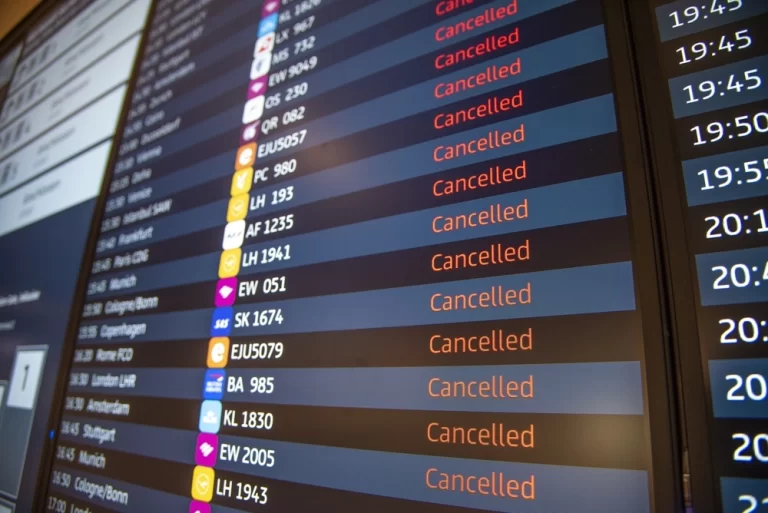
The “Weather-Buffer” Framework: In maritime travel, a budget plan is only as good as its backup plan. This model requires a 20% “time and cash buffer” to account for sea-state delays. Without this buffer, a canceled ferry can lead to an emergency high-cost flight or a missed international connection, instantly obliterating the budget.
Key Categories of Island Hopping and Geographic Variations
The logistics of island hopping vary significantly based on the region’s infrastructure and geography.
| Region | Primary Transit Mode | Cost Profile | Trade-offs |
| Cyclades (Greece) | Large Ferries (Blue Star) | Mid-range | High reliability; expensive in peak summer. |
| Visayas (Philippines) | RORO & FastCraft | Low | Complex schedules; weather sensitive. |
| Southern Thailand | Longtails & Speedboats | Low-Mid | Highly flexible; uncomfortable in rough seas. |
| Canary Islands (Spain) | Inter-island Flights/Ferries | Mid-High | Excellent infrastructure; less “off-grid” feel. |
| Dalmatian Coast (Croatia) | Catamarans | High | High demand; reservations essential. |
| Gili/Lombok (Indonesia) | Public Boats & FastBoats | Low | Very affordable; varied safety standards. |
Realistic Decision Logic
If your goal is to minimize cost above all else, the Visayas or Indonesia offer the best “cost-per-mile” ratio. However, these require the highest degree of “Adaptability.” If you value a balance of budget and predictability, the Cyclades in the “Shoulder Season” (May/September) provides the most stable environment for a budget plan.
Detailed Real-World Scenarios
Scenario 1: The “Peak Season” Compression
A traveler attempts to hop through the Greek Islands in July without pre-booking.
-
Constraint: Accommodation on popular islands like Santorini or Milos triples in price.
-
Failure Mode: They are forced to stay in the most expensive remaining rooms or sleep in ferry terminals.
-
Second-Order Effect: The stress of finding a bed ruins the restorative intent of the trip.
-
Lesson: In high-demand regions, “Budget” is synonymous with “Advance Planning.”
Scenario 2: The “Remote Island” Supply Chain
A couple travels to a remote island in the Palawan region of the Philippines.
-
Context: They find a cheap $15 beach hut.
-
Constraint: The island has no ATMs and only one restaurant that imports all ingredients from the mainland.
-
Result: The “cheap” accommodation is offset by $40 daily meals and high boat-transfer fees.
-
Lesson: Always calculate the “Total Cost of Island Entry” (Transit + On-island Inflation).
Planning, Cost, and Resource Dynamics
The economics of island hopping are dictated by “Connectivity Costs.”
| Expense Category | Budget Range (Daily) | Variability Factors |
| Inter-Island Transit | $10 – $45 | Vessel speed; booking lead time; fuel surcharges. |
| Island Lodging | $15 – $60 | Proximity to water; fan vs. AC; local island tax. |
| Sustenance | $10 – $30 | Market-sourced vs. resort-dining; alcohol taxes. |
| Local Mobility | $5 – $15 | Scooter rentals vs. private tricycle/taxi. |
Opportunity Cost: Spending $100 on a 5-island pass in 7 days. The “Transit Fatigue” means you spend 30% of your waking hours on boats, reducing the value of each dollar spent on the destination itself. Reducing the count to 3 islands increases the “Value-per-Island.”
Strategic Support Systems and Navigation Tools
-
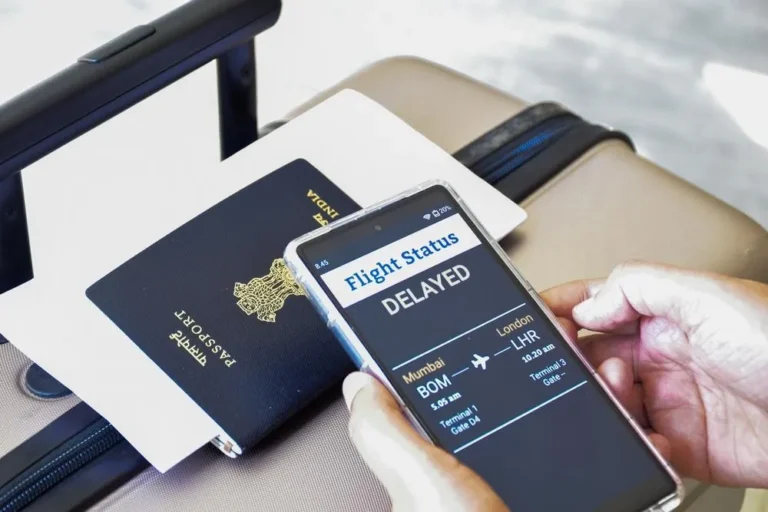
Marine Traffic Apps: Using apps like MarineTraffic to see if your ferry is actually on the way or delayed at a previous port.
-
Offline Topographic Maps: Essential for remote islands where cell signal drops as soon as you leave the main pier.
-
Regional “Social Proof” Groups: WhatsApp or Facebook groups where travelers share “Real-Time” ferry price updates (often different from official websites).
-
Waterproof Dry-Bags: A budget “Insurance Tool”—preventing the $1,000 cost of a ruined laptop during a wet boat boarding.
-
Multi-Currency Digital Banks: Tools like Revolut or Wise to avoid the 5-10% “Island Markup” on currency exchange.
-
Inflatable Kayaks/SUPs: (For long-term stayers) A tool to reach nearby “hidden” beaches without paying for daily boat tours.
Risk Landscape and Failure Mode Taxonomy
-
Logistical Fragility: The “Missed Connection” risk. If one boat is late, the entire 3-island chain of bookings can collapse.
-
Climatological Volatility: Tropical storms or Mediterranean “Meltemi” winds that ground all small-craft for 3-4 days.
-
Regulatory Shifts: Sudden changes in island entry fees or permit requirements (common in protected marine parks).
-
Health Vectors: “Sea Sickness” is a logistical risk—it can render a traveler unable to move to the next destination, leading to forfeited booking fees.
Governance, Maintenance, and Long-Term Adaptation
Operating a budget itinerary requires “Itinerary Maintenance.” You cannot set it and forget it.
-
The “48-Hour Review”: Every two days, check the weather forecast and the local ferry status. If a storm is brewing, move your transit day up or stay put in a “safe harbor” island.
-
Financial Monitoring: Tracking “Leakage.” Small costs—pier fees, luggage tips, bottled water—can add up to 20% of a budget if not monitored.
-
Layered Checklist:
-
Physical: Sun exposure check, hydration levels.
-
Logistical: Ticket confirmation, terminal location verification.
-
Technical: Battery backup levels, offline map updates.
-
Measurement, Tracking, and Evaluation
How do you evaluate if your plan was successful?
-
The “Cost-per-Experience” Metric: Did the $50 boat ride lead to a unique experience, or just another beach that looked like the last one?
-
Stress-to-Leisure Ratio: If 40% of your time was spent worrying about logistics, the “Budget” plan failed the quality test.
-
Leading Indicator: The ability to secure a “local-rate” ticket for a transit leg.
-
Lagging Indicator: The total expenditure vs. the initial budget (accounting for the 20% buffer).
Common Misconceptions and Industry Myths
-
Myth: Speedboats are better value because they save time. Correction: Speedboats are high-friction; they are loud, bumpy, and prone to breaking down or being canceled in rough water compared to heavy ferries.
-
Myth: Island hopping is only for the summer. Correction: “Shoulder Season” offers 50% lower prices with 90% of the same weather quality.
-
Myth: All-inclusive “Island Pass” deals save money. Correction: They often restrict you to the most expensive, tourist-heavy routes and operators.
-
Myth: You can’t plan it on a budget. Correction: It is entirely possible, provided you are willing to trade “Velocity” for “Immersion.”
Ethical and Sustainability Considerations
Budget travelers often have a smaller “positive footprint” because they spend less. To counter this, one should:
-
Support the “Micro-Economy”: Eat at the “Carinderia” (local eatery) rather than the resort.
-
Reduce Plastic Dependency: Islands have poor waste management; carrying a filtered water bottle is a logistical and ethical win.
-
Respect “Marine Sanctuaries”: Avoiding the use of “Anchor-Drag” boats and choosing operators that respect reef boundaries.
Conclusion: The Synthesis of Logic and Exploration
The ultimate success of how to plan island hopping on a budget depends on the traveler’s ability to remain “Logistically Fluid.” It is a journey that requires the soul of an explorer and the mind of a quartermaster. By understanding that islands are not just destinations but fragile ecosystems with unique economic pressures, the traveler can navigate them with greater empathy and efficiency. The most memorable maritime journeys are not those that cost the most, but those where the logistics disappeared into the background, leaving only the rhythm of the waves and the silhouette of the next horizon. In the end, the best budget plan is the one that buys the most “Presence”—the ability to be fully in the destination without the weight of financial or logistical anxiety.