Best Vineyard Honeymoons United States: A Definitive Editorial Guide
The intersection of luxury hospitality and agricultural heritage has transformed the American wine region from a mere production hub into a sophisticated destination for significant life events. Within the domestic travel market, the vineyard honeymoon represents a specific sub-sector that prioritizes sensory immersion, geographic permanence, and a “slow travel” ethos. Unlike the high-velocity consumption of metropolitan tourism, the vineyard environment demands a more contemplative engagement with the landscape. This shift toward agritourism-led luxury is not a trend but a structural change in how modern couples conceptualize intimacy and celebration.
Navigating the diversity of the American wine landscape requires an analytical understanding of terroir—not just in the enological sense, but as a framework for travel. A vineyard stay in the volcanic soils of the Willamette Valley offers a fundamentally different psychological and logistical experience than one situated in the maritime-influenced microclimates of Long Island’s North Fork. The complexity of these environments means that the “best” choice is rarely a universal constant; it is a variable determined by the couple’s tolerance for regional climate fluctuations, their interest in specific viticultural philosophies, and the level of service integration they require.
As the hospitality industry increasingly prioritizes “authenticity,” the distinction between a commercial hotel that happens to be near grapes and a functioning estate that integrates guests into its seasonal rhythm has become the primary metric of quality. A definitive analysis of the best vineyard honeymoons united states must account for these nuances. It requires looking past the polished marketing of major AVAs (American Viticultural Areas) to examine the operational integrity of the estates themselves—evaluating their land stewardship, their culinary programs, and their ability to provide seclusion without isolation.
Understanding “best vineyard honeymoons United States”
To define what constitutes the best vineyard honeymoons united states, one must first dismantle the oversimplification that wine travel is exclusively a Californian pursuit. While the Napa and Sonoma valleys remain the structural pillars of the industry, the “best” experiences are increasingly found in emerging regions that offer greater exclusivity and a more direct connection to the winemaking process. A premier honeymoon in this category is characterized by a “closed-loop” experience, where the wine consumed, the food served, and the view from the suite are all products of the same square mile of earth.
A common misunderstanding in this sector is the conflation of “tasting room access” with “honeymoon quality.” Many travelers prioritize proximity to a high volume of tasting rooms, which often leads to a high-friction, transit-heavy trip that erodes the relaxation intended for a honeymoon. In contrast, an editorial perspective suggests that the highest tier of experience is found on estates that function as self-contained ecosystems. These properties allow for a “stationary” honeymoon, where the need for external transportation is minimized, and the couple can synchronize their schedule with the agrarian pace of the vineyard.
The risk of choosing based solely on brand recognition is that of the “commoditized luxury” experience. In heavily trafficked wine regions, service can become transactional and standardized. The truly elite stay—those that earn a place in the definitive list of the best vineyard honeymoons in the United States—are those that maintain a high staff-to-guest ratio and offer bespoke access to the cellar, the vineyard manager, and private “library” tastings. This level of depth is what differentiates a standard vacation from a flagship honeymoon.
The Historical and Systemic Evolution of American Wine Tourism
The American vineyard stay has evolved from the “tasting room and inn” model of the 1970s into a multi-billion-dollar luxury infrastructure. Historically, wine tourism in the U.S. was a secondary activity to production. However, following the 1976 “Judgment of Paris,” which elevated California wines on the global stage, a systemic shift occurred. Investment poured into the Napa Valley, creating the first wave of ultra-luxury resorts that treated the vineyard as an aesthetic backdrop rather than a working farm.
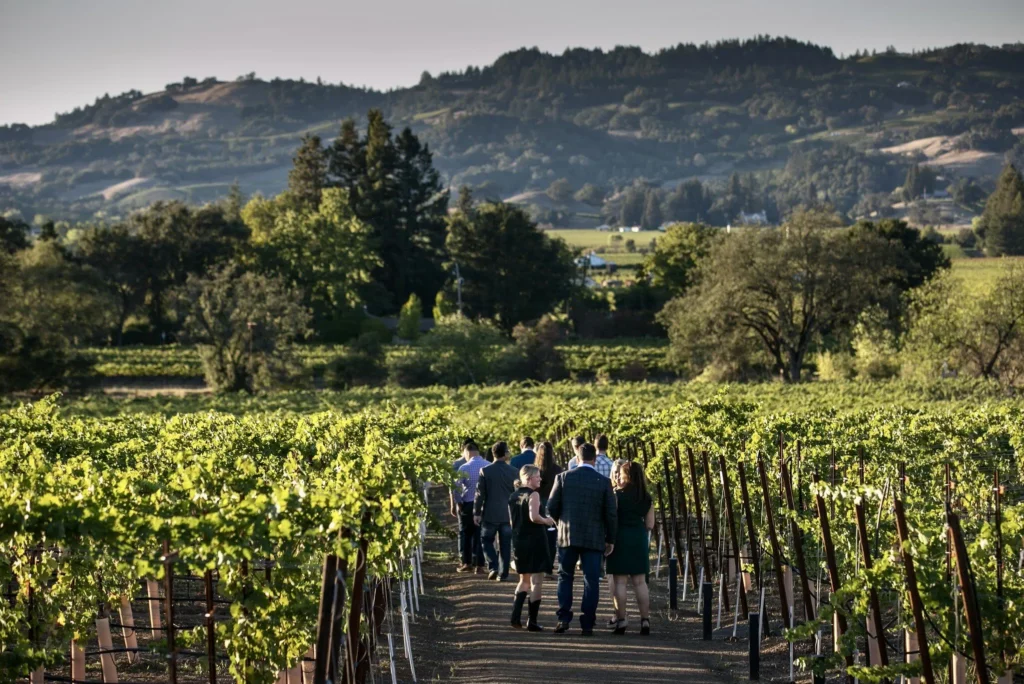
In the 1990s and early 2000s, the “Sonoma Model” emerged as an alternative, emphasizing a more rustic, “farm-to-table” approach that resonated with a younger demographic seeking authenticity over ostentation. Today, the system has matured further, with regions like the Finger Lakes, the Texas Hill Country, and the Walla Walla Valley developing their own high-fidelity hospitality tiers. This decentralization of luxury has created a more robust market, allowing for “niche” honeymoons focused on specific interests like biodynamic farming, sparkling wine production, or historical architectural preservation.
Conceptual Frameworks and Mental Models
To evaluate a vineyard honeymoon with clinical precision, planners should utilize specific mental models.
The Terroir-Service Alignment
Just as the soil and climate determine the wine’s character, they also determine the honeymoon’s “vibe.” A maritime terroir (cool, foggy, slow-ripening) typically aligns with a more “introspective” and cozy service model (fireplaces, spa-heavy). A continental or volcanic terroir (intense sun, dramatic scenery) aligns with an “extrospective” model (outdoor activities, terrace dining, bold flavors).
The “Vertical” vs. “Horizontal” Experience
A “horizontal” honeymoon involves visiting multiple wineries across a region, prioritizing variety and exploration. A “vertical” honeymoon involves staying deeply on one estate, prioritizing depth of knowledge and total relaxation. For post-wedding recovery, the vertical model often provides higher emotional returns.
The “Crush-to-Quiet” Seasonal Model
Understand the vineyard’s lifecycle. During the “crush” (harvest season), the environment is high-energy, noisy, and industrious. During the “quiet” (winter pruning), it is stark, silent, and deeply private. The best honeymoon is one where the couple’s desired energy level matches the vineyard’s seasonal activity.
Key Categories of Viticultural Regions and Trade-offs
The U.S. offers several distinct viticultural “biomes,” each with its own set of trade-offs.
| Region | Primary Varietals | Aesthetic Logic | Trade-off |
| Napa/Sonoma, CA | Cab Sauv, Chardonnay | High-gloss luxury; Mediterranean. | High cost; high crowd density. |
| Willamette Valley, OR | Pinot Noir | Misty, evergreen, organic. | Unpredictable rain; “rustic” service. |
| Finger Lakes, NY | Riesling, Cab Franc | Glacial lakes; historical estates. | High travel friction; seasonal extremes. |
| Central Coast, CA | Rhone Blends, Syrah | Coastal cliffs; relaxed “cowboy” chic. | Sprawling geography requires driving. |
| Walla Walla, WA | Merlot, Syrah | Rolling wheat/vine hills; desert light. | Remote access; limited luxury keys. |
| Virginia Piedmont | Viognier, Bordeaux Blends | Rolling hills; colonial history. | Humidity in summer; varying quality tiers. |
Detailed Real-World Scenarios and Decision Logic
Scenario A: The Disconnection Seeker
A couple coming off a high-stress corporate wedding in New York City.
-
The Constraint: They want zero “itinerary pressure” and maximum privacy.
-
The Decision: An independent estate in Oregon’s Eola-Amity Hills.
-
Logic: The region’s focus on small-batch production and the prevalence of cottage-style accommodation provide a “buffer” from the tourist crowds of Napa, allowing for true psychological detachment.
Scenario B: The Culinary Enthusiast Duo
A couple that views wine as an accompaniment to a world-class dining program.
-
The Constraint: They want access to Michelin-starred dining without leaving the property.
-
The Decision: A branded luxury vineyard resort in St. Helena, Napa.
-
Logic: While the cost is at the top of the market, the integration of a legendary culinary team and a deep cellar ensures that every meal is an “event,” minimizing the logistical friction of finding reservations elsewhere.
Planning, Cost, and Resource Dynamics
The economic landscape of a vineyard honeymoon is characterized by high variability. Unlike a beach resort, a vineyard’s value is often tied to its “bottle price” and its “vintage” reputation.
Range-Based Resource Allocation Table
| Tier | Daily Rate (Base) | Key Resource Requirement | Potential Variance |
| Boutique Farmhouse | $400 – $700 | Rental Car/Personal Transport | Low (Stable pricing) |
| Luxury Estate | $900 – $1,800 | Advance Reservations (3-6 mo) | Moderate (Seasonal) |
| Ultra-Private Villa | $2,500 – $6,000+ | Concierge/Agent Coordination | High (Events/Harvest) |
Tools, Strategies, and Strategic Support Systems
-
The “Pre-Arrival Cellar” Strategy: Proactively email the estate sommelier to request a “vertical” of their flagships in your room upon arrival. This establishes your status as a serious enthusiast rather than a casual tourist.
-
Allocation List Leverage: If you are a member of a winery’s allocation list, use that status to request private tours or room upgrades. Wineries prioritize their “loyalists” over third-party booking sites.
-
Regional Weather Analytics: Use tools like “Western Regional Climate Center” data to track the “fog line” in California or Oregon. Staying above the fog line ensures sunset views, while staying below it provides cooler, mistier mornings.
-
The “Mid-Week” Tactical Move: Book your vineyard honeymoon from Sunday to Thursday. Not only are rates 20-30% lower, but the winemakers are more likely to be on-site and available for conversation than on busy weekends.
-
Private Driver Integration: For “horizontal” exploration, hire a local driver rather than using rideshares. Local drivers often have “back-gate” access to exclusive wineries and provide essential local context.
The Risk Landscape and Failure Modes
-
The “Tasting Fatigue” Factor: The most common failure mode is over-booking. Tasting more than three wineries in a day leads to sensory saturation and physical exhaustion.
-
Environmental/Climatic Risk: Wildfires in the West and frost in the East are systemic risks. Always ensure travel insurance covers “smoke taint” closures or agricultural-related service disruptions.
-
The “Monoculture” Boredom: Some vineyard regions offer little else besides wine. If one partner isn’t as enthusiastic, the “honeymoon utility” drops. Mitigation involves choosing regions with secondary activities (e.g., hiking in Oregon, lakes in NY, coast in SLO).
Governance, Maintenance, and Long-Term Adaptation
A vineyard honeymoon is often the start of a “collecting lifecycle.”
-
The “Anniversary Bottle” Governance: Purchase a case of a specific vintage during your honeymoon. Opening one bottle every anniversary creates a “living memory” of the trip.
-
Monitoring the Region: Wine regions change. A “best” region this year may become overdeveloped in five years. Maintain a “secondary region” watch list.
-
Layered Checklist for Arrival:
-
Confirm private tasting times.
-
Check for local harvest festivals (traffic/noise).
-
Verify restaurant “corkage” policies for your own bottles.
-
Measurement, Tracking, and Evaluation Metrics
-
The “Flow Rate” Metric: How much time was spent in transit vs. in-state relaxation? The “best” honeymoons minimize transit time.
-
The Discovery Ratio: For every “famous” bottle tried, did you discover one “hidden gem” from a small producer?
-
Physical Recovery Data: Using wearables to track resting heart rate and sleep quality; a successful vineyard honeymoon should see these metrics improve despite the alcohol consumption.
Common Misconceptions and Oversimplifications
-
Myth: Harvest is the best time to visit. Fact: It’s the most crowded and expensive; winemakers are too busy to talk. Spring “bud break” is often more scenic and tranquil.
-
Myth: You need to be a wine expert. Fact: The best educators are the best estates. A lack of knowledge is often an advantage as it allows for a “beginner’s mind” experience.
-
Myth: Expensive wine means an expensive stay. Fact: Many world-class AVAs have high-quality independent inns that provide luxury without the “brand-name” markup of a resort.
-
Myth: Oregon is always raining. Fact: The summer months in the Willamette Valley are among the driest and most temperate in the U.S.
Ethical and Contextual Considerations
The ethics of wine tourism include labor practices and water usage. The “best” honeymoon is one that supports estates with transparent fair-labor certifications and those utilizing sustainable water-retention systems. In regions like California, supporting “Dry Farming” initiatives is a practical way to ensure your luxury doesn’t come at the cost of the local community’s water security.
Conclusion: The Synthesis of Choice and Value
Achieving the best vineyard honeymoons united states requires a rejection of the generic in favor of the specific. It is an exercise in identifying the intersection of geological beauty and human craft. Whether it is the fog-shrouded hills of the Pacific Northwest or the sun-drenched valleys of the Central Coast, the American vineyard offers a depth of experience that is resilient to the passage of time. By applying a clinical framework to selection and a sensory openness to the experience, a couple can ensure their honeymoon is not just a trip, but a definitive entry into the world of viticultural appreciation.