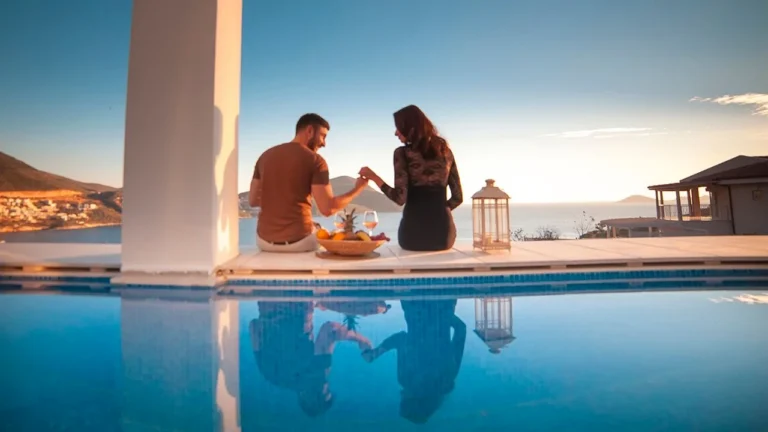
Best Beach Honeymoons United States: A 2026 Editorial Guide
The coastal geography of North America offers an expansive, multi-textured canvas for milestone travel, yet the selection of a maritime sanctuary often suffers from a lack of analytical rigor. In 2026, the domestic shoreline has moved beyond the “sun-and-sand” trope to become a sophisticated ecosystem of hospitality that rivals Mediterranean or South Pacific counterparts. For those navigating the post-wedding landscape, the decision involves more than choosing a latitude; it requires an assessment of maritime microclimates, coastal infrastructure, and the psychological interplay between the sea and human restoration.
The United States maritime border spans over 95,000 miles of shoreline, yet only a fraction of this territory possesses the “service density” required for a high-tier honeymoon. Identifying these locations requires an editorial eye that distinguishes between a popular summer destination and a dedicated romantic sanctuary.
As global travel logistics become increasingly volatile, the domestic beach has ascended as a strategic choice for high-net-worth travelers seeking “frictionless luxury.” The ability to bypass international customs and language barriers while accessing world-class biodiversity—from the coral reefs of the Florida Keys to the dramatic sea stacks of the Oregon coast—has redefined the domestic coastline. However, this accessibility brings its own set of challenges, including seasonal overcrowding and environmental fragility, which necessitate a more disciplined approach to planning and execution.
This discourse aims to deconstruct the components of the premier coastal experiences available today. We will move past the superficiality of listicles to examine the systemic factors that define the “maritime-luxury” sector, the economic drivers of coastal hospitality, and the mental models required to select a destination that offers long-term emotional resonance rather than a fleeting aesthetic experience.
Understanding “best beach honeymoons in the United States”.
The term “best” in the context of coastal travel is frequently misused by search algorithms to prioritize high-commission affiliate partners. For an editorial professional, identifying the best beach honeymoons united states requires a multi-dimensional assessment of geographic exclusivity, service maturity, and what we call “Environmental Contrast.“
Multi-Perspective Explanation
From a logistical perspective, the premier beach honeymoon is one where the transit-to-relaxation ratio is optimized. This often favors islands like Lanai or Maui, or private enclaves in the Florida Keys. From a psychological perspective, it involves the “Blue Space” effect—the physiological reduction in cortisol levels triggered by proximity to water. Finally, from a service perspective, it involves “Anticipatory Hospitality,” where the resort’s infrastructure removes the need for any guest-side decision-making regarding logistics, dining, or equipment.
Oversimplification Risks
A common risk is the “Climate Assumption,” where travelers equate “beach” with “tropical.” This ignores the profound romantic utility of temperate and cold-water coasts, such as the rugged cliffs of Big Sur or the historic dunes of Nantucket. Oversimplification also occurs when couples fail to account for “Social Density”—booking a high-tier resort that is physically adjacent to a high-traffic public beach, thereby compromising the privacy that is the hallmark of a true honeymoon.
Deep Contextual Background
Historically, the American beach honeymoon was a regional affair. The early 20th century saw the rise of the “Grand Seaside Hotels” in places like Atlantic City or Coronado, which were essentially social stages for the elite. These were followed by the “Resort Hegemony” of the 1970s and 80s, which emphasized massive, self-contained properties with 500+ rooms and standardized amenities.

By 2026, we will have entered the “Ecological-Boutique” era. The modern honeymooner increasingly avoids the high-traffic hubs in favor of “Low-Inventory” properties—resorts with fewer than 40 units that offer a higher degree of biophilic integration. This shift reflects a systemic change in the American definition of luxury: moving away from “visible opulence” and toward “invisible service” and “environmental stewardship.” We are seeing a renaissance in the Pacific Northwest and the Mid-Atlantic, where the “beach experience” is defined by nature-immersion rather than just sunbathing.
Conceptual Frameworks and Mental Models
To evaluate coastal destinations with the rigor of a senior editor, consider these four frameworks.
1. The “Isolation-Infrastructure” Paradox
A premier coastal destination must provide the illusion of being at the end of the world while being supported by a robust logistical backbone. If a location is too hard to reach, the “transit fatigue” erodes the first few days of the honeymoon. The best domestic beach spots solve this through private aviation partnerships or seamless car-to-boat transfers that begin the service experience the moment the guest lands at a regional airport.
2. The Maritime Lindy Effect
In hospitality, the Lindy Effect suggests that if a coastal town has been a premier romantic destination for 100 years (like Carmel-by-the-Sea or Newport), it has developed the systemic maturity to handle the complexities of milestone travel. These locations have deep talent pools in the service industry and a “Culture of Discretion” that newer “viral” destinations often lack.
3. The Sensory Contrast Model
Romance is often a function of contrast. For an urban couple, the most effective beach honeymoon is not just “water,” but a specific type of water that contrasts with their daily life. If they live in a humid city, the dry, rugged coast of Southern California provides a more profound “nervous system reset” than a similarly luxurious resort in the Southeast.
4. The “Buffer” Framework
In coastal travel, the “Buffer” is the physical and social space between the couple and the public. A true honeymoon-tier resort does not share beach access with day-trippers. It manages the “Soundscape” and the “Visual Horizon” to ensure that the couple’s experience remains private and uninterrupted.
Key Categories and Regional Variations
The U.S. coastal market is categorized by “Environmental Archetypes,” each carrying specific trade-offs.
| Archetype | Typical Location | Primary Trade-off | Service Style |
| Subtropical Enclave | Florida Keys; Lanai, HI | High humidity; environmental fragility. | Immersive / Relaxed |
| Rugged Pacific Coast | Big Sur, CA; Cannon Beach, OR | Fog/Cold water; remote driving. | Naturalist / Quiet |
| Atlantic Heritage | Nantucket, MA; Sea Island, GA | Seasonal crowds; high social density. | Formal / Classic |
| Gulf Coast Solitude | St. George Island, FL | Limited high-end lodging; remote. | Low-key / Private |
| Volcanic Archipelago | Kauai, HI; Big Island, HI | High transit cost; active topography. | Bespoke / Adventurous |
| Pacific Mediterranean | Santa Barbara, CA; Malibu, CA | High cost-of-living; urban proximity. | Sophisticated / Chic |
Decision Logic: The “Post-Wedding” Energy State
If the wedding was a high-stress, large-scale event, the “Rugged Pacific Coast” or “Subtropical Enclave” archetypes are superior for nervous system regulation. If the couple finds energy in culture and movement, the “Atlantic Heritage” or “Pacific Mediterranean” models provide more sustained engagement.
Detailed Real-World Scenarios
Scenario 1: The “May Gray” Miscalculation
A couple books a luxury oceanfront villa in Malibu for a late-May honeymoon.
-
The Reality: Southern California experiences “May Gray,” where a thick marine layer obscures the sun for 20 hours a day.
-
The Failure: Because they planned for a “sun-drenched” experience, they lack the gear for 60°F dampness.
-
The Lesson: Coastal planning requires a hyper-local understanding of maritime weather patterns beyond general averages.
Scenario 2: The “Public Access” Contradiction
A couple chooses a top-rated resort on the Maui coastline based on social media reviews.
-
The Constraint: All beaches in Hawaii are public.
-
The Reality: Their “private” romantic sunset is shared with 200 other people.
-
The Solution: In these regions, luxury is not found on the beach itself but in the “Elevated Privacy” of the resort’s higher-tier suites or private pool decks that overlook the ocean without being on it.
Planning, Cost, and Resource Dynamics
The domestic coastal honeymoon market in 2026 operates on a “Premium-Plus” pricing model. Unlike international destinations where the dollar may have significant purchasing power, the U.S. luxury market is competitive and expensive.
Range-Based Domestic Investment Table (7 Days)
| Tier | Investment (USD) | Primary Cost Drivers | Resource Strategy |
| Boutique Coastal | $7,000 – $12,000 | Regional flights; 4.5-star lodging. | Focus on “Secondary” beach towns. |
| Flagship Luxury | $18,000 – $35,000 | First-class air; 5-star flagship brands. | Leverage “Amex FHR” or “Virtuoso” perks. |
| Private Estate | $50,000+ | Private aviation; villa buyouts. | Full-service concierge management. |
The Opportunity Cost of “Points”
Couples often use credit card points to subsidize their honeymoon. However, in the domestic market, “points-available” hotels are often massive, high-traffic properties. The opportunity cost of saving $5,000 on lodging might be the loss of the “honeymoon ambiance” that a smaller, cash-only boutique property would have provided.
Tools, Strategies, and Support Systems
-
Marine Forecast Apps: Tools like Windy or Surfline are essential for understanding local swell and wind patterns that affect coastal comfort.
-
Noise-Pollution Mapping: Checking the property’s proximity to public beach access points or boat traffic using satellite and noise-density tools.
-
The “Last-Mile” Concierge Check: Contacting the resort to verify the specific room’s “Visual Privacy”—asking if the balcony is overlooked by communal areas.
-
Resort “Inventory” Trackers: Monitoring when “Signature Suites” open up due to last-minute cancellations in low-inventory properties.
-
Micro-Weather Analysis: Using historical weather data for specific zip codes (e.g., 90265 vs 92651) to understand fog patterns.
-
“Cancel for Any Reason” (CFAR) Insurance: Essential for hurricane-prone (Atlantic/Gulf) or fire-prone (Pacific) regions.
Risk Landscape and Failure Modes
Taxonomy of Coastal Risk
-
The “Talent Gap”: Post-2020, many high-end domestic resorts struggle with staffing. A $3,000/night resort that cannot find a chef or a spa therapist is a “Service Failure Mode.“
-
Systemic Over-Tourism: Iconic locations (like Nantucket or Key West) have infrastructure that is often overwhelmed, leading to “Friction-Creep” in every logistical step.
-
Climatic Displacement: Wildfire smoke in the West or Hurricane season in the East now encompasses larger windows of the year, necessitating a robust “Plan B.“
Compounding Risks
A “logistical failure” (delayed flight) combined with a “weather failure” (onshore gale) can turn a $20,000 trip into a week of misery. The best romantic spots are those that have a “High Recovery Rate”—indoor infrastructure (spas, libraries, world-class dining) that makes the weather irrelevant.
Governance, Maintenance, and Long-Term Adaptation
A honeymoon plan must be “governed” to prevent decision fatigue.
-
The “72-Hour Rule”: No major logistical changes or high-cost activities should be booked within the first 72 hours of arrival. This period is strictly for nervous system regulation.
-
The “Pulse Check”: Every 48 hours, the couple should evaluate their “Energy Level.“
-
Seasonal Adaptation: If a West Coast trip is threatened by smoke, the “Governance Plan” should have a pre-vetted East Coast alternative ready for a 48-hour pivot.
Measurement, Tracking, and Evaluation
-
Leading Indicator: The “Transit-to-Activity” ratio. How many hours were spent in cars or planes versus in the environment?
-
Qualitative Signal: The “Presence Score”—how often did the couple feel they had to “manage” the trip versus being “managed” by the service staff?
-
Efficiency: Was the “Aesthetic Premium” worth it? Did the $2,000/night view provide more value than a $1,000/night room with better service?
Common Misconceptions and Oversimplifications
-
“California is always sunny.” The Central Coast is often colder and grayer than New England in the early summer.
-
“Private Beach” means “No People.” In most of the U.S., the beach is public up to the high-tide line. Privacy is a function of “Distance from Access,” not legal ownership.
-
“Florida is a budget option.” High-end Florida (Palm Beach or the private islands of the Keys) is as expensive as any global destination.
-
“Hawaii is a single destination.” The difference between the service culture of Lanai and the mass tourism of Waikiki is the difference between two different countries.
Ethical and Contextual Considerations
The ethics of coastal luxury involve “Resource Respect.” In fragile ecosystems like the Florida Keys or the Hawaiian Islands, the high-resource usage of luxury resorts is a point of contention. Couples should prioritize properties that implement rigorous sustainability protocols and support local land-management initiatives. Additionally, the “Service Economy” of American travel often relies on a precarious workforce; prioritizing properties known for high employee retention and fair wage practices is a key component of ethical travel.
Conclusion
The selection of the best beach honeymoons united states is ultimately an exercise in identifying “Quality of Experience” over “Quantity of Views.” While the digital landscape will continue to push high-inventory, high-traffic destinations, the senior editorial judgment remains clear: true romantic resonance is found in the “Quiet Infrastructure”—the places that offer absolute privacy, environmental contrast, and service maturity.