How to Manage Flight Cancellations: A Definitive Editorial Guide (2026)
The modern aviation network functions as a hyper-synchronized, global machine, operating with tolerances so thin that a single localized disturbance can trigger a cascade of systemic failures. When a flight is removed from the active schedule, it is rarely an isolated administrative event. Instead, it is the visible manifestation of a complex interplay between meteorological volatility, labor availability, technological maintenance, and the rigid mathematical constraints of air traffic control. For the passenger, the immediate experience is one of acute powerlessness, yet the ability to recover from such a disruption is fundamentally a matter of information asymmetry. Those who understand the underlying mechanics of the airline industry can often bypass the friction that traps the general public.
Aviation logistics are governed by the principle of “network integrity.” Every aircraft and crew member is a node in a multi-layered sequence; when one node fails, the downstream effects are immediate. To navigate this environment effectively, one must move beyond the emotional reaction to a canceled flight and adopt the mindset of a systems manager. The goal is not merely to “get home,” but to optimize for the most efficient re-entry into the flow of global transit while minimizing the erosion of capital, time, and psychological equilibrium. This requires a granular understanding of passenger rights, carrier obligations, and the “dark” logistics of standby seating and interline agreements.
In an era of increasing climate instability and technological complexity, the frequency of these disruptions is projected to rise. Consequently, the skill set required to navigate the airport terminal is shifting from passive consumption to active intervention. This article serves as a definitive survey of the protocols and strategic frameworks necessary to handle these disruptions with clinical precision. By dissecting the systemic evolution of flight scheduling and the regulatory landscapes of different jurisdictions, we provide the foundational knowledge required to transform a chaotic event into a manageable administrative task.
Understanding “how to manage flight cancellations.”
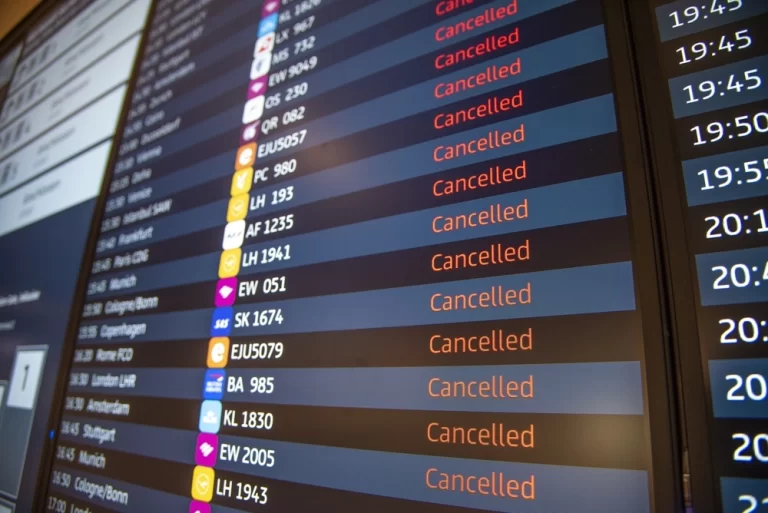
To properly grasp how to manage flight cancellations, one must first distinguish between a “delay” and a “cancellation.” A delay is a temporary suspension of the schedule within the same operational window; a cancellation is a formal dissolution of the contract of carriage for that specific flight number. The primary risk in managing this event is the “oversimplification of agency.” Many passengers believe their only recourse is the gate agent or a phone queue. In reality, the management of a cancellation is a multi-channel operation involving digital self-service, third-party advocacy, and the tactical use of regional regulatory frameworks like the Department of Transportation (DOT) rules in the US or EC 261 in Europe.
A multi-perspective view reveals that “success” in these scenarios is often a function of speed. In a cancellation event, several hundred people are suddenly competing for a finite number of seats on the next available flight. This is a classic “bottleneck” scenario. Learning how to manage flight cancellations effectively means bypassing the queue entirely—physically and digitally. It requires understanding that the person at the gate has the least amount of information and authority compared to a telephone agent or a customer relations specialist who can view the entire carrier network.
There is also a prevalent misunderstanding regarding “reasoning.” Carriers often cite “weather” or “Air Traffic Control (ATC)” as the cause because these categories typically absolve them of the obligation to provide hotels or meals. However, modern disruption management involves “root cause auditing.” If five other airlines are flying to the same destination while yours is grounded for “weather,” the issue may actually be crew-scheduling or aircraft maintenance—categories where the passenger is entitled to significant compensation. Understanding this distinction is the difference between sleeping on a terminal floor and a hotel-vouchered rest.
Deep Contextual Background: The Evolution of Scheduling Volatility
The contemporary landscape of flight cancellations is a byproduct of the “Deregulation Era” and the subsequent shift toward the “Hub-and-Spoke” model. In the mid-20th century, airline schedules were built with significant “slack.” Aircraft spent more time on the ground, and crews were more localized. Today, optimization algorithms have removed almost all slack from the system. Planes are scheduled for 12 to 16 hours of daily utilization, and crews are routed through complex patterns that span continents. While this has lowered ticket prices, it has made the system brittle. A localized thunderstorm in Chicago can now cause cancellations in London six hours later.
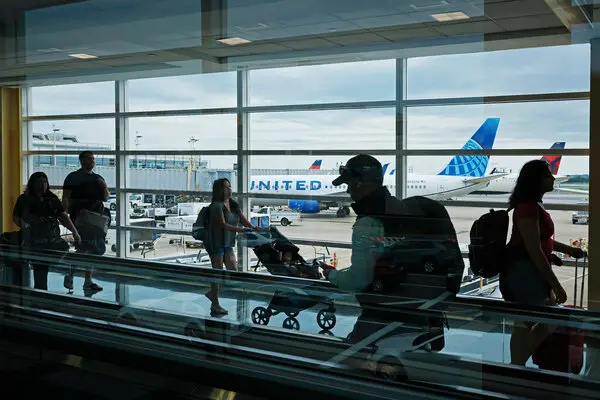
Furthermore, the “Regionalization” of the airline industry has introduced a new layer of vulnerability. Many major carriers outsource their short-haul routes to regional partners who operate under the same brand name but have different labor contracts and maintenance standards. When disruptions occur, these regional flights are often the first to be canceled because they impact fewer passengers per flight, allowing the carrier to preserve the “high-yield” long-haul routes. This “triage” strategy is a fundamental part of modern airline operations that most passengers fail to account for when booking.
Conceptual Frameworks and Mental Models for Disruption Recovery
The “Golden Hour” of Rebooking
In aviation logistics, the first 60 minutes following a cancellation announcement are the most critical. This is when seat availability is at its highest and airline systems are the most fluid. This model suggests that the traveler must have “pre-programmed” responses—apps open, phone numbers saved, and alternative routes identified—to act before the crowd saturates the support channels.
The “Interline” Mental Model
Many travelers assume they are tethered to the airline that sold them the ticket. However, major carriers participate in “interline agreements” that allow them to put passengers on a competitor’s flight in the event of an involuntary cancellation. When managing a disruption, one should look at the “entire terminal,” not just the carrier’s desk. Proposing a specific seat on a competitor’s flight to an agent often yields a faster result than waiting for the carrier to find a solution internally.
The “Friction-to-Outcome” Ratio
This framework evaluates whether it is more efficient to stay and fight for a rebooking or to “cut and run”—booking a separate ticket on another airline or a different mode of transport (train/rental car). If the cost of the new ticket is lower than the value of the lost time and the cost of an overnight stay, the “cut and run” strategy is the mathematically superior choice.
Key Categories of Disruption and Decision Logic
Navigating a cancellation requires a taxonomy of the event to determine the correct tactical response.
| Category | Typical Cause | Carrier Obligation | Priority Strategy |
| Controllable | Mechanical, Crew Scheduling | Full (Meals, Hotel, Refund) | Demand specific vouchers; push for interlining. |
| Non-Controllable | Weather, ATC, Geopolitical | Low (Rebooking only) | Use travel insurance; pivot to alternative airports. |
| “Hidden” Controllable | IT Failure, Network Outage | Full | Document the outage; avoid “weather” labels. |
| Cascading Delay | Late arrival ofthe inbound plane | Variable | Argue the root cause; check the origin of the inbound flight. |
Decision Logic: If the cancellation is “Controllable,” the goal is to extract the maximum service recovery from the airline. If it is “Non-Controllable,” the goal is to activate secondary support systems like credit card insurance and personal logistics.
Detailed Real-World Scenarios and Failure Modes
Scenario A: The Last Flight of the Day
A passenger is on the 9:00 PM departure from New York to London. At 8:45 PM, the flight is canceled due to a mechanical issue.
-
The Constraint: All other flights for the night are full or have already departed.
-
Failure Mode: Waiting in the terminal line. By the time the passenger reaches the agent, all nearby hotel rooms will be booked by other passengers.
-
Optimal Decision: Book a hotel via a mobile app while walking to the luggage claim; call the international support line (e.g., the airline’s UK office) to beat the domestic queue.
Scenario B: The Small Hub Bottleneck
A cancellation occurs at a regional airport with only two flights per day.
-
The Constraint: The next flight on that carrier is 24 hours away.
-
Failure Mode: Accepting the 24-hour wait.
-
Optimal Decision: Negotiate a “ground transport” voucher to the nearest major hub (3 hours away) and rebook from there. Often, the carrier will pay for a taxi or bus if it saves them a hotel bill.
Cost Dynamics and Resource Allocation
Managing a flight cancellation involves both direct and indirect costs. The “Total Cost of Disruption” (TCD) is a formula that travelers rarely calculate but should.
Range-Based Table of Disruption Costs
| Resource | Direct Cost (Estimated) | Opportunity Cost | Total Impact |
| Emergency Hotel | $150 – $450 | Lost Sleep/Next Day Productivity | High |
| Last-Minute Ticket | $400 – $1,200 | Depletion of Emergency Fund | Very High |
| Ground Transit | $50 – $200 | Physical Fatigue | Moderate |
| Communication | $0 – $50 | Cognitive Stress/Decision Fatigue | Moderate |
The primary strategy for minimizing TCD is the “Insurance Buffer.” Travelers who use premium credit cards for booking often have “Trip Delay” coverage that kicks in after 6 hours, covering up to $500 in expenses regardless of the airline’s fault.
Strategic Support Systems and Tactical Tools
-
FlightAware/FlightRadar24: Use these to track the “inbound” aircraft. Often, you will see a cancellation coming hours before the airline announces it.
-
Airline Regional Phone Numbers: Save the carrier’s Australian, Canadian, or UK numbers. When the US lines are jammed, these offices are often quiet and have the same booking power.
-
ExpertFlyer: This tool allows you to see “actual” seat availability and “hidden” fare classes (like Award or Upgrade seats) that agents might not volunteer.
-
The “Social Media Pivot”: Direct Messages on platform X (formerly Twitter) are often handled by dedicated, high-tier support teams who can process rebookings faster than phone agents.
-
Lounge Access: Even if not a member, paying for a day pass to an airline lounge provides access to “premium agents” who have shorter lines and more authority than gate agents.
-
AirHelp/Skycop: Third-party services that handle the legal bureaucracy of claiming EC 261 or UK 261 compensation for a fee.
The Risk Landscape: Compounding Failures at the Edge
A flight cancellation is rarely the final failure. It is often the “triggering event” for a series of compounding risks:
-
The Luggage Trap: Once a flight is canceled, your checked bag is in limbo. If you are rebooked on a different airline, your bag may still go to the original destination, or stay in a “cold” storage unit at the origin.
-
The “Ghost Flight” Risk: Airlines sometimes “reinstate” a flight after canceling it if a mechanical fix is found. If you have already left the airport, you are marked as a “No Show” and lose your ticket value.
-
Visa/Immigration Overstays: In international transit, a cancellation can leave you in a “sterile zone” without a visa to enter the country. Managing this requires immediate coordination with airport police or immigration officers.
Governance and Long-Term Adaptation for the Frequent Traveler
For those who travel extensively, the management of disruptions must be “institutionalized.”
-
Review Cycle: After a major disruption, audit your performance. Did your insurance pay out? How long did it take to get a refund? Use this data to change your booking habits.
-
Adjustment Triggers: If a specific airline or hub (e.g., London Heathrow or Newark) shows a consistent pattern of cancellation, remove them from your “approved” list for time-sensitive travel.
-
Layered Checklist: Maintain a “Disruption Kit” in your carry-on—external battery, universal charger, change of clothes, and a physical copy of your insurance policy.
Measurement, Tracking, and Evaluation of Success Metrics
How do you know if you managed a cancellation well?
-
Quantitative Signal: The “Time to Re-Entry”—the duration between the cancellation notice and your arrival at the final destination. A delta of less than 6 hours is considered “Elite” performance.
-
Leading Indicator: Whether you were notified by an independent app (like Flighty) before the airline sent its official SMS.
-
Qualitative Signal: Your stress levels. Did you have to run? Did you lose a night of sleep? A successful recovery is one where the “emotional cost” is kept at a minimum.
Common Misconceptions and Oversimplifications
-
Myth: “The airline must give me a hotel.” Fact: In the US, there is no federal law requiring this for weather-related events. It is a matter of contract, not law.
-
Myth: “Non-refundable tickets mean no refund for a cancellation.” Fact: If the airline cancels the flight, you are entitled to a full cash refund (not just a voucher) regardless of the ticket type.
-
Myth: “The gate agent has more power.” Fact: Gate agents are often contractors with limited system access. Phone agents usually have “unrestricted” booking capabilities.
-
Myth: “Connecting flights are always safer.” Fact: Each connection is a “failure point.” Direct flights are inherently more resilient to network disruptions.
Ethical and Practical Considerations in Aviation Advocacy
When managing a cancellation, there is a fine line between “informed advocacy” and “abusive behavior.” Airline staff are often under extreme stress during mass disruptions.
-
The “Human Factor”: Research suggests that polite but firm travelers who use industry terminology (e.g., “Rule 240” or “Interline Agreement”) receive better service than those who yell.
-
Information Ethics: Do not hoard multiple rebooked seats on different carriers. This prevents other stranded passengers from getting home and can lead to the cancellation of your entire itinerary.
Conclusion: The Synthesis of Resilience and Information
Learning how to manage flight cancellations is ultimately an exercise in “operational resilience.” The traveler who views the aviation network as a predictable utility will always be vulnerable to its inevitable failures. However, the traveler who understands the network as a fluid, competitive, and constrained system can navigate its fissures with agility. Recovery is found in the intersection of digital tools, regulatory knowledge, and the mental clarity to act during the “Golden Hour.” While we cannot control the weather or the mechanical integrity of a turbine, we can control our position within the queue of the stranded. In the modern era of travel, the most important piece of luggage is the information that allows us to find the exit when the main door closes.