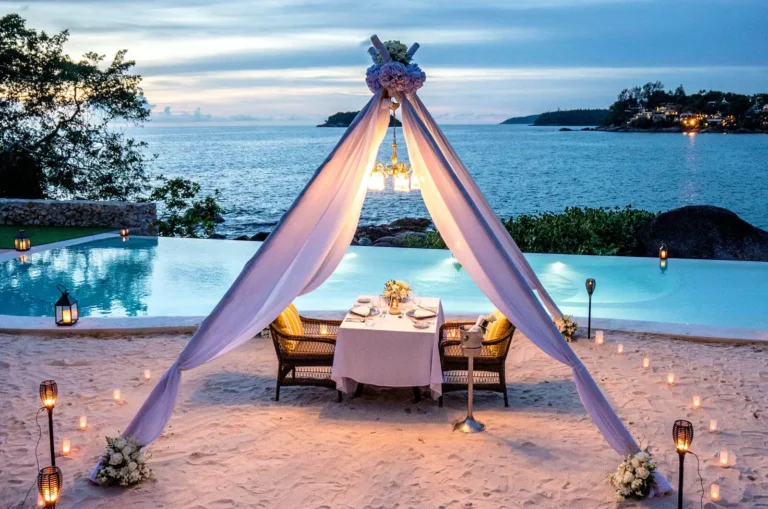
Best Luxury Honeymoon Options: A 2026 Strategic Editorial Guide
The selection of a post-wedding sanctuary has evolved from a simple vacation choice into a complex exercise in high-tier resource management and psychological orchestration. In the contemporary travel landscape, luxury is no longer defined by the accumulation of gilded amenities but by the precision of service and the exclusivity of time. For the modern couple, navigating the myriad of global destinations requires an analytical framework that transcends the superficiality of glossy brochures and algorithmic recommendations. The objective is to identify an environment that functions as a “liminal space,” facilitating a profound transition from the logistical intensity of a wedding to the sustained intimacy of a shared life.
As global mobility becomes increasingly fraught with systemic frictions—ranging from climate volatility to the erosion of service standards in mass-market hospitality—the definition of a “world-class” experience has narrowed. True excellence now resides in properties and regions that maintain “operational depth,” where the human element of service is as meticulously engineered as the physical architecture. This involves a move away from performative luxury toward “invisible hospitality,” where the guest’s needs are anticipated and neutralized before they reach the level of conscious thought.
The domestic and international markets in 2026 present a fascinating study in geographic specialization. We see a rise in “niche-luxuries,” where the value proposition is built upon specific ecological or cultural assets—be it the stark, meditative silence of the Utah desert or the historic, manicured elegance of a Kyoto ryokan. Understanding these variables is essential for any couple seeking to optimize their emotional and financial investment. The following discourse deconstructs the structural components of the premier global options, providing a definitive reference for those who demand intellectual and aesthetic integrity from their travel choices.
Understanding “best luxury honeymoon options.”
To identify the best luxury honeymoon options, one must first decouple the concept from mere expense. In an editorial context, a premier option is an ecosystem designed to minimize “cognitive load.” A destination may cost $5,000 per night, but if the couple must still navigate logistical hurdles or face inconsistent service, it fails the primary test of high-tier honeymoon travel.
Multi-Perspective Analysis
From a psychological perspective, the “best” option provides an “Environmental Reset.” This is the degree to which the surroundings contrast with the couple’s daily life, triggering a neurological shift into presence and connection. From a logistical perspective, it is a problem of “Friction Management”—the ability of the resort or planner to handle the “last mile” of travel with absolute seamlessness. Finally, from a sociological perspective, these options serve as “enclaves of exclusivity,” providing a curated reality that is shielded from the noise of mass-market tourism.
Risks of Oversimplification
A common risk in this sector is the “Brand Bias,” where couples assume that a high-tier hotel chain provides a uniform experience globally. This ignores the “Talent Density” of specific properties; a brand’s flagship in Paris may be flawless, while its satellite in a newer market may struggle with operational maturity. Oversimplification also occurs when “luxury” is equated with “activity.” For many high-functioning couples, the ultimate luxury is “nothingness”—the ability to exist in a spectacular environment without the pressure of an itinerary.
Deep Contextual Background
Historically, the luxury honeymoon was a highly codified, multi-generational tradition. In the 19th and early 20th centuries, it followed the “Grand Tour” model—lengthy stays at heritage hotels in London, Paris, and Rome. These were social experiences as much as romantic ones. Following the democratization of air travel in the mid-20th century, the market shifted toward “Tropical Escapism,” with the Caribbean and French Polynesia becoming the de facto aspirational standard.

By 2026, we will have entered the “Age of Autonomy.” The modern luxury market has pivoted away from the 500-room resort toward “Low-Inventory” properties—exclusive-use villas, remote lodges, and boutique estates with fewer than 20 units. This maturation reflects a systemic change in the definition of status: moving away from “visible opulence” and toward “private experiences.” This shift is supported by an increasingly sophisticated global logistical network that allows for high-tier service in previously inaccessible regions, such as the remote islands of the Seychelles or the private conservancies of the Serengeti.
Conceptual Frameworks and Mental Models
To evaluate travel with editorial rigor, we utilize three primary frameworks.
1. The Isolation-Accessibility Matrix
A premier option must exist at the intersection of perceived isolation and physical accessibility. If a location is too difficult to reach, the “transit fatigue” erodes the first 48 hours of the experience. If it is too accessible, the sense of “escape” is compromised. The ideal solution utilizes private aviation or specialized transfers to bridge this gap, ensuring the transition is part of the luxury itself.
2. The Hedonic Adaptation Guardrail
Humans adapt to luxury with remarkable speed. A $10,000 suite feels “normal” by day three. To maintain the psychological “peak” of the honeymoon, successful itineraries utilize “Sequenced Upgrading.” This involves starting in a high-quality but “standard” luxury room and moving to a “Signature Suite” or a different, more intense environment for the final segment of the trip.
3. The Lindy Effect in Hospitality
The Lindy Effect suggests that the longer a destination has provided high-tier hospitality, the more likely it is to continue doing so effectively. Established hubs of luxury—like the Amalfi Coast or the Swiss Alps—possess a “Culture of Discretion” and a deep talent pool in the service industry that “trendy” pop-up destinations often lack.
Key Categories and Regional Variations
Global offerings are categorized by “Environmental Archetypes,” each carrying specific trade-offs in terms of privacy, climate, and engagement.
| Archetype | Prime Examples | Primary Trade-off | Service Style |
| High-Desert Solitude | Amangiri, UT; Atacama, Chile | Extreme aridity; remote logistics. | Minimalist / Attentive |
| Maritime Enclaves | Lanai, HI; North Island, Seychelles | High transit cost; environmental fragility. | Immersive / Relaxed |
| Alpine Sanctuaries | Dolomites, Italy; Zermatt, Switzerland | Altitude adjustment; gear-intensive. | Rugged / Bespoke |
| Cultural Heritage | Kyoto, Japan; Florence, Italy | High social density; language barriers. | Formal / Educational |
| Savanna Private Use | Singita, South Africa; Mara Nyika, Kenya | Wildlife safety protocols; flight hops. | Intuitive / Protective |
| Coastal Mediterranean | Cote d’Azur, France; Peloponnese, Greece | Seasonal overcrowding; high “social” noise. | Chic / Anonymous |
Decision Logic: The “Post-Wedding” Energy State
The selection should be dictated by the couple’s “Internal Weather.” If the wedding was a high-stress event, the “High-Desert Solitude” or “Maritime Enclaves” provide the sensory-neutral environments necessary for nervous system regulation. Conversely, if the couple seeks to celebrate their new status with vibrancy, “Cultural Heritage” or “Coastal Mediterranean” models offer the social friction that sparks new shared narratives.
Detailed Real-World Scenarios
Scenario 1: The “Seasonal Mismatch”
A couple booked a luxury overwater bungalow in the Maldives for a June honeymoon.
-
The Reality: June is the monsoon season; while the resort is 5-star, the “outdoor luxury” is rendered unusable by high winds and rain.
-
The Failure: The “Aesthetic Premium” is lost to weather volatility.
-
Lesson: Global planning requires a hyper-local understanding of micro-climates beyond general averages.
Scenario 2: The “Privacy-Service” Paradox
A couple rents a massive private villa on a popular Caribbean island.
-
The Constraint: The villa requires a staff of six to operate.
-
The Result: The couple feels “monitored” rather than “attended to.”
-
Lesson: True luxury is “Invisible Service”—the staff should be present only when needed and invisible when not.
Planning, Cost, and Resource Dynamics
The luxury honeymoon market in 2026 operates on a “Premium-Plus” pricing model. Value is no longer found in the base price, but in “Experience Layering.”
Global Investment Table (10 Days)
| Tier | Investment (USD) | Primary Cost Drivers | Resource Strategy |
| Curated Boutique | $20,000 – $35,000 | Business class; 4.5-star boutique hotels. | Focus on “Secondary” luxury cities. |
| Flagship Luxury | $50,000 – $90,000 | First-class air; 5-star flagship brands. | Utilize “Amex FHR” or “Virtuoso” perks. |
| Ultra-Private | $150,000+ | Private aviation; full villa buyouts. | Full-service concierge “Fixer” management. |
The Opportunity Cost of “Complexity”
Couples often try to “see everything” by visiting four countries in twelve days. The opportunity cost is “Intimacy.” Each border crossing and hotel check-in consumes four to six hours of “Prime Romantic Time.” The most efficient plans focus on “Saturation”—spending ten days in one high-tier environment.
Tools, Strategies, and Support Systems
-
Micro-Weather Analysis: Using tools like Dark Sky or regional marine forecasts to avoid “unseasonable” weather patterns.
-
Noise-Pollution Mapping: Checking a property’s proximity to public infrastructure or nightlife using noise-density tools.
-
The “Fixer” Network: Engaging local concierges who exist outside the hotel’s ecosystem to provide access to non-tourist experiences.
-
Empty-Leg Flight Monitors: For ultra-luxury tiers, monitoring private jet empty legs can provide private transit at a 50% discount.
-
Acoustic Privacy Check: Contacting the resort to verify the “Soundproofing” and “Sightlines” of specific villa numbers.
-
“Cancel for Any Reason” (CFAR) Insurance: Non-negotiable in an era of climatic and geopolitical volatility.
Risk Landscape and Failure Modes
Taxonomy of Luxury Risks
-
The “Talent Gap”: A resort may have 5-star hardware but “untrained” software—staffing shortages that lead to slow service or uncleaned communal areas.
-
Systemic Over-Tourism: Iconic locations (like Amalfi or Santorini) have infrastructure that is often overwhelmed, leading to “Friction-Creep” in every logistical step.
-
Climatic Displacement: Wildfires in the West or hurricanes in the East can render a destination uninhabitable with 48 hours’ notice.
Compounding Failures
A “logistical failure” (delayed flight) combined with a “service failure” (unhelpful front desk) often leads to a “relational failure.” In a high-stakes honeymoon setting, these risks compound because the expectation for “perfection” is so high. The best options are those that have a “High Recovery Rate”—staff trained to fix problems before the guest notices.
Governance, Maintenance, and Long-Term Adaptation
A honeymoon plan must be “governed” to prevent decision fatigue.
-
The “72-Hour Rule”: No major logistical changes or high-cost activities should be booked within the first 72 hours of arrival. This is the “Reset Period.”
-
The “Pulse Check”: Every 48 hours, the couple should evaluate their “Energy Level.” If exhausted, the “romantic dinner” should be canceled in favor of stillness.
-
Review Cycles: After the trip, the couple should document what “style” of luxury worked for them—was it the formal service or the casual-chic? This adapts their future anniversary travel.
Measurement, Tracking, and Evaluation
-
Leading Indicator: The “Transit-to-Activity” ratio. How many hours were spent in cars or planes versus in the environment?
-
Qualitative Signal: The “Presence Score”—how often did the couple feel they had to “manage” the trip versus being “managed” by the service staff?
-
Efficiency Metric: Was the “Aesthetic Premium” worth it? Did the $3,000/night view provide more value than a $1,000/night room with better service?
Common Misconceptions and Oversimplifications
-
“Bigger is better.” Massive resorts are the antithesis of romance. Look for properties with under 50 keys.
-
“Luxury means formal.” Modern luxury is often “Casual-Sophisticated.” You are paying for the quality of the ingredients and the silence, not the dress code.
-
“The most expensive room is the best.” Often, a “lower-tier” room with a better view or more privacy is superior to a “Presidential Suite” located near the lobby.
-
“Hawaii is a budget option.” High-end Hawaii (Lanai or the private estates of Maui) is as expensive as any global destination.
-
“I’ll figure it out when we get there.” This is the fastest way to incur “Decision Fatigue.” High-tier travel requires pre-solving all “boring” logistics.
Ethical and Practical Considerations
In 2026, luxury travel involves “Resource Integrity.” When staying at a high-water-usage resort in a drought-prone desert or a remote island property, guests should evaluate the resort’s relationship with its local environment. True luxury is sustainable; it does not deplete the very beauty that makes it a destination. Choosing “Secondary Spots” (like the Mogollon Rim instead of Sedona) is both more romantic and more ethical.
Conclusion
The pursuit of the best luxury honeymoon options is ultimately an exercise in “Relational Stewardship.” In a world where geography has been flattened by digital accessibility, the true luxury is not the destination, but the quality of the attention that can be paid to one’s partner within that destination. By rejecting the performative and embracing the structural—prioritizing privacy, service depth, and environmental contrast—couples can transform travel from a simple escape into a profound, resilient foundation for their shared life.